4 November 2020

Jhorna!! (Bengali alert)

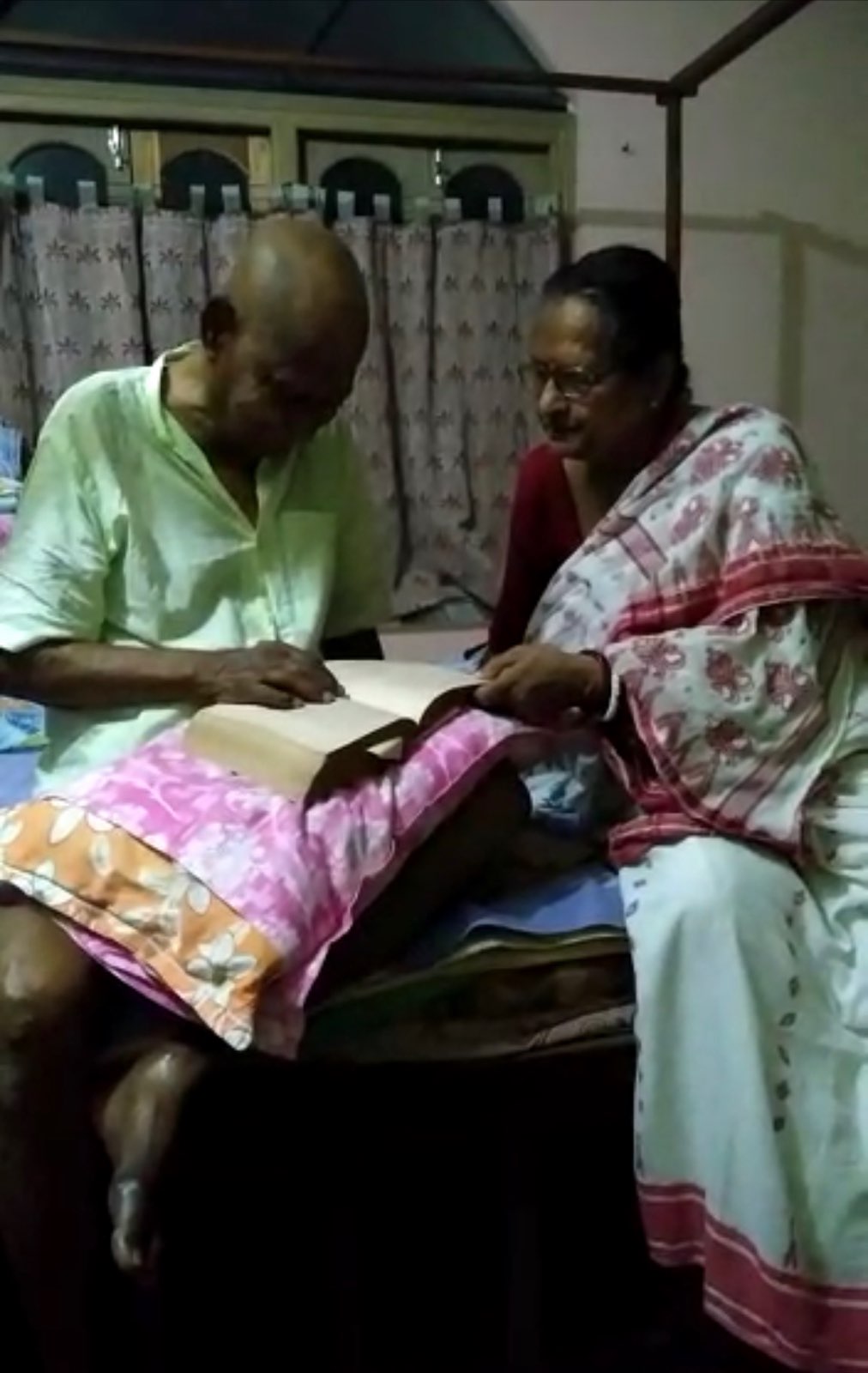
This morning mom reported that amidst the continuous pain my dad is going thru (he is having a real rough time), he had a bright spot when my sister came over and talked about his recitations. My dad used to enjoy reciting Bengali poems – mostly Rabindranath Tagore’s poems. (as in any self-respecting reciter born in the early to mid 1900s Bengal would do).

Looks like he gave it a shot at reciting when my sister brought up the topic.
I asked mom “Which poem did he recite?”
“Nirjhorer swapnobhongo”, she said referring to one of his old time favorites.

Just to engage mom, I asked “What does Nirjhor mean?” After a couple of minutes she gave up. And I let her know the meaning of that Bengali word is a “waterfall” (cataract, cascade).

She immediately asked me “Onno jhorna-r kabita ta mon-e aachhey?”. She enquired if I remembered another famous Bengali poem describing a waterfall. I did remember the one she was referring to. My dad used to recite that one too.

Written by Satyendranath Dutta – often referred to as the Wizard of Rhythm – it is an absolute masterpiece. Each and every word is golden. But the cadence/tempo of the words as you recite them is impossible to forget. There is no amount of translation that can do justice to the words. Certainly there is no way of carrying the rhythm in any translation.

I did remember the first paragraph. It has been impossible to forget ever since our Bengali teacher in eighth grade – Mrs. Gita Mitra – had taught this poem. Such lilting and catchy is the tempo.

Later looked up the whole poem. Turns out I had forgotten most of the rest of the poem. Which is a shame. It is an absolute gem of a poetic talent. Here is the whole poem for my Bengali friends…


ঝর্ণা ! ঝর্ণা ! সুন্দরী ঝর্ণা !
তরলিত চন্দ্রিকা ! চন্দন-বর্ণা !
অঞ্চল সিঞ্চিত গৈরিকে স্বর্ণে,
গিরি-মল্লিকা দোলে কুন্তলে কর্ণে,
তনু ভরি’ যৌবন, তাপসী অপর্ণা !
ঝর্ণা !

পাষাণের স্নেহধারা ! তুষারের বিন্দু !
ডাকে তোরে চিত-লোল উতরোল সিন্ধু |
মেঘ হানে জুঁইফুলী বৃষ্টি ও-অঙ্গে,
চুমা-চুম্ কীর হারে চাঁদ ঘেরে রঙ্গে,
ধূলা-ভরা দ্যায় ধরা তোর লাগি ধর্ণা !
ঝর্ণা !

এস তৃষার দেশে এস কলহাস্যে-
গিরি-দরী-বিহীরিনী হরিনীর লাস্যে,
ধূসরের ঊষরের কর তুমি অন্ত,
শ্যামলিয়া ও পরশে কর গো শ্রীমন্ত;
ভরা ঘট এস নিয়ে ভরসায় ভর্ণা;
ঝর্ণা !

শৈলের পৈঠৈয় এস তনুগত্রী !
পাহাড়ে বুক-চেরা এস প্রেমদাত্রী !
পান্নার অঞ্জলি দিতে দিতে আয় গো,
হরিচরণ-চ্যুতা গঙ্গার প্রায় গো,
স্বর্গের সুধা আনো মর্ত্যে সুপর্ণা !
ঝর্ণা !

মঞ্জুল ও-হাসির বেলোয়ারি আওয়াজে
ওলো চঞ্চলা ! তোর পথ হল ছাওয়া যে !
মোতিয়া মোতির কুঁড়ি মূরছে ও-অলকে;
মেখলায়, মরি মরি, রামধনু ঝলকে
তুমি স্বপ্নের সখী বিদ্যুত্পর্ণা
ঝর্ণা !
—-
17 October 2020

Weekend decompression: Yeh Na Thi Hamari Qismat!

This one is from Mirza Ghalib:

Yeh na thi hamari qismat, ke wisaal-e-yaar hota
Agar aur jeete rehtey, yehi intezaar hota.

Tere waade par jeeye hum to, yeh jaan jhoot jaana
Ke khushi se mar na jaate, agar aitbaar hota

Koi meray dil se poochhey, tere teer-e-neemkash ko
Yeh khalish kahan se hoti, jo jigar ke paar hota

Kahoon kisse main ke kya hai, shab-e-gham buri balaa hai
Mujhe kya bura tha marna, agar ek baar hota

Huye mar ke hum jo ruswa, huye kyun ka gharq-e-dariya
Na kabhi janaaza uth ta, na kahin mazaar hota

Yeh masaael-e-tasavvuf, yeh tera bayaan Ghalib
Tujhe hum Wali samajhte, jo na badaa khwar hota
 

The translation is from Khuswant Singh. Other than the lines I marked with ##. Those two lines were not there in the version Khuswant translated.

To be united with the beloved was not writ in my fate,
Had I lived any longer, it would have been the same long wait.

I lived on your promises, I knew they were not true,
Would not I have died of joy had I believed in you?

Ask my heart about the pain of love and it will tell you
The half-drawn bow’s the assassin, not the arrow that pierces through.

To whom can I speak of sorrows that come with the fading of light?
Death would be welcome, if it did not stand at my door every night.

##Disgraced as I shall be in death, why not I drown in the sea?
##Fated, as I am to not have a funeral, nor a tomb erected for me. 

Your concern with mystic problems, Ghalib, your language is such
You could have passed off for a saint, had you not drunk so much.

9 October 2020

Friday evening winding down

This was is from Hakim Momin Khan Momin. Commonly referred to as “Momin”, the poet lived in Delhi and was contemporary to Mirza Ghalib.

“Woh jo humme tumme qaraar thaa
Tumhein yaad ho ke naa yaad ho
Wohi yaani vaada nibhaah kaa
Tumhein yaad ho ke naa yaad ho

Woh jo lutf mujh pe the beshtar
Woh qaram ke thaa mere haal par
Mujhe sab hai yaad zaraa-zaraa
Tumhein yaad ho ke naa yaad ho”

Roughly translated,
“The agreement that we had between us
Maybe you remember, maybe you do not
That promise of being together
Maybe you remember, maybe you do not

That joy that was always with me
That kindness that was bestowed upon me
Every bit of those memories are still with me
Maybe you remember, maybe you do not”

3 October 2020

From the pen of Nasir Kazmi

“Naye kapde badal kar jaun kahan
Aur bal banaun kis ke liye

Wo shakhs to shahar hi chhor gaya
Main bahaar jaaun kiske liye


Jis dhup ki dil ko thandak thi
Wo dhup usi ke saath gayee

In jalti bujhti galiyon mein
Ab khak udaoon kiske liye

Wo shahar mein tha to uske liye
Auron se milna parta tha

Ab aise-waise logon ke naaz
Main uthaun kiske liye

Muddat se koi aaya na gayaa
Sunsaan padi hai ghar ki faza

In khali kamron mein ‘Nasir’
Ab shamma jalaun kis k liye”

The rendition for this evening was by Ustad Gulshan Mir – dad of the Noorani sisters.

18 September 2020

Friday evening … an attempt to get in touch with the soulful side

“Unki nazron ne kuch aisa jadoo kiya
Loot gaye hum to pehli mulaqat mein
Sharaab seekh pe daali,
Kabaab sheeshe mein
Jo baat thi unko kehne ki
Wo baat hi kehna bhul gaye
Gairon ke fasane yaad rahe
Hum apna fasana bhul gaye”

Roughly translated…

“Her mesmerizing glance had this magic on me
I got devastated the first time I met her

(/*so discombobulated I was by her beauty that */)

I poured the wine on barbecue skewers
And served the meat in the chalice

What I was going to chat her up about
I completely forgot to bring up
I remembered to tell the stories of total strangers
But forgot to tell her my own story”

13 September 2020

Finally, some time to enjoy some Qawaali…

Meri nazar ko junoon ka payaam de saaqi
Meri hayaat ko laafani shaam de saaqi
Yeh roz roz ka peene mujhe pasand nahi
Kabhi na hosh mein aaun wo jaam de saaqi

To remind ourselves, “saaqi” refers to the (female) partner that is usually either pouring the drink or accompanying you in drinking.

Oh Saaqi! Give my eyes that vision of frenzy
Offer to my life that evening that dies, Oh Saaqi!
I am tired of this drinking every single evening
This time give me that drink that never gets me back to my senses.

4 September 2020

Friday evening relaxation

From the pen of Fana Bulandshahari. The real name of the poet was Muhammad Haneef. He was born in Bulandshahar (in Uttar Pradesh in India) and derives his second name from that. Fana was the pen name he had adopted.

“Maine maana janaab peeta hoon
Bakhuda Behisaab peeta hoon
Log logon ka khoon peete hain
Main toh phir bhi sharaab peeta hoon

Zindagi ka azaab peeta hoon
Bann ke khana-kharaab peeta hoon
Roz-e-mehshar hisaab ho na sake
Is liye behisaab peeta hoon”

Better translations welcome…

“Agreed, your honor, I am given to drinking
By God, I drink without keeping any count
But other people drink others’ blood often
I am merely given to drinking alcohol

I drink to all the torments of my life
And I drink to my own ruin
Never knew how to count to the Day of Judgment
Never thus knew how to count while drinking

15 August 2020

In Iqbal’s words…

“Subh-e-Azal ye mujh se kaha Jibraeel ne,

Jo akal ka ghulam ho, woh dil na kar qabool.”

These are words from the immortal poet Allama Iqbal (Muhammad Iqbal). Iqbal, who is the national poet of Pakistan (I think his birthday used to be a national holiday in Pakistan but no more), is widely respected for his poetry in all Farsi, Urdu and Hindi speaking countries in Asia.

Jibraeel is the archangel in Islam that corresponds to Gabriel in all Abrahamic religions (Judaism, Christianity, Modern Day Saints …). The meaning of the lines are:

“At the dawn of creation, Gabriel (Jibraeel) said this to me
Do not ever accept a heart that has surrendered to the mind”

31 July 2020

Throwback to forty years back

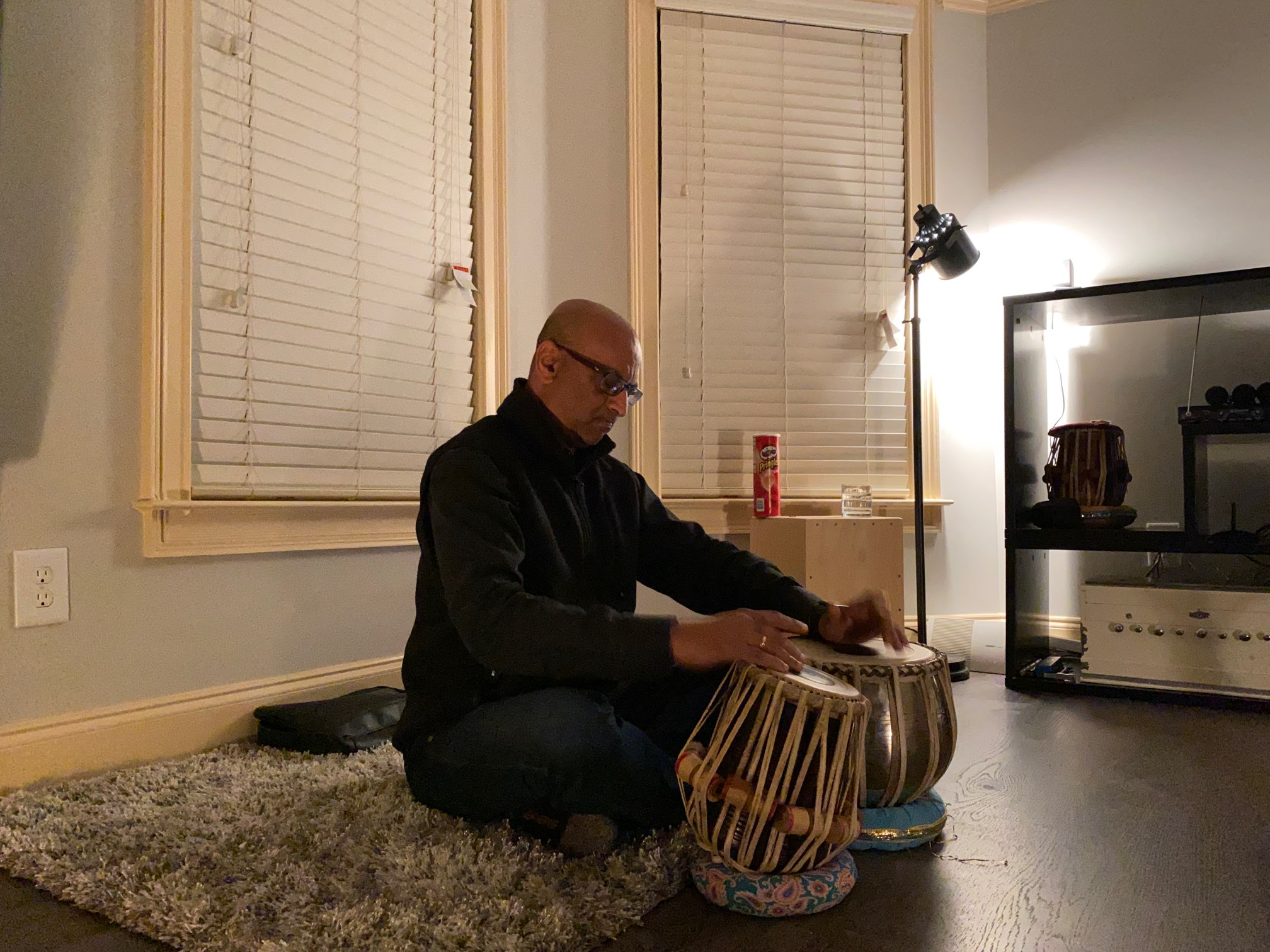
I remember in 1980 my sister had learnt how to sing this song. And I had accompanied her on the tabla. That was forty years back. The words and the tune are by the famous Bengali poet – Nazrul Islam.

“Musafir! mochh re aankhijol
Phirey chol aponaarey niya
Aponi phhutechhilo phool
Giyaachhhey aponi jhoriya

Re pagol! Eki durasha
Jol-e tui bnadhbi baasa
Metey na hetaa-y piyasa
Heta naai trishna doriya”

Roughly translated…

“Oh wayfarer! wipe your tears
Let’s return; collect yourself
The flower that had bloomed itself
Has also shed on its own

Oh madcap! what insane hope is this
That you will build your home on water
Your thirst won’t be quenched here
There is no fountain of elixir here”

19 July 2020

Saturday evening relaxation

“Pehlu Mein Hai Raqib Tumhare Khuda Ki Shaan
Kaanta Bi Hai Woheen Pe Jahan Pe Gulaab Hai
Kehte Hain Jaam Bhar Ke Woh Kaisi Adaa Ke Saath
Pee Lo Humaare Hath Se Peena Sawaab Hai”

I will need some help in translating the first line (or for that matter, all the lines) from somebody who is well versed in Urdu. I think it goes something like this…

“God’s grace is (unfortunately) on your rival’s side // raqib often refers to your rival with who you are vying for the lady’s attention
When you find a rose, there will be thorns too // meaning a thing of beauty will always come with pain
Filling my glass with wine, she says playfully
Drink from my own hand; drinking is my reward” // meaning your only reward is that you get to drink the wine she is serving