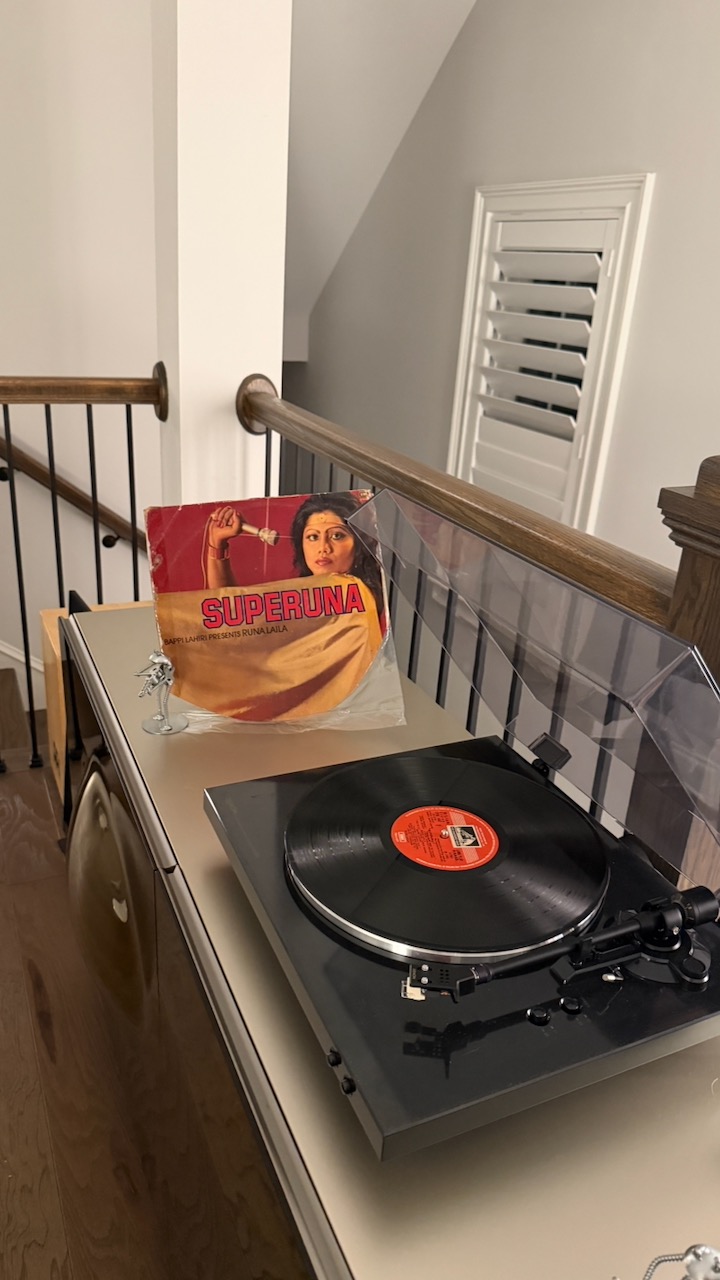
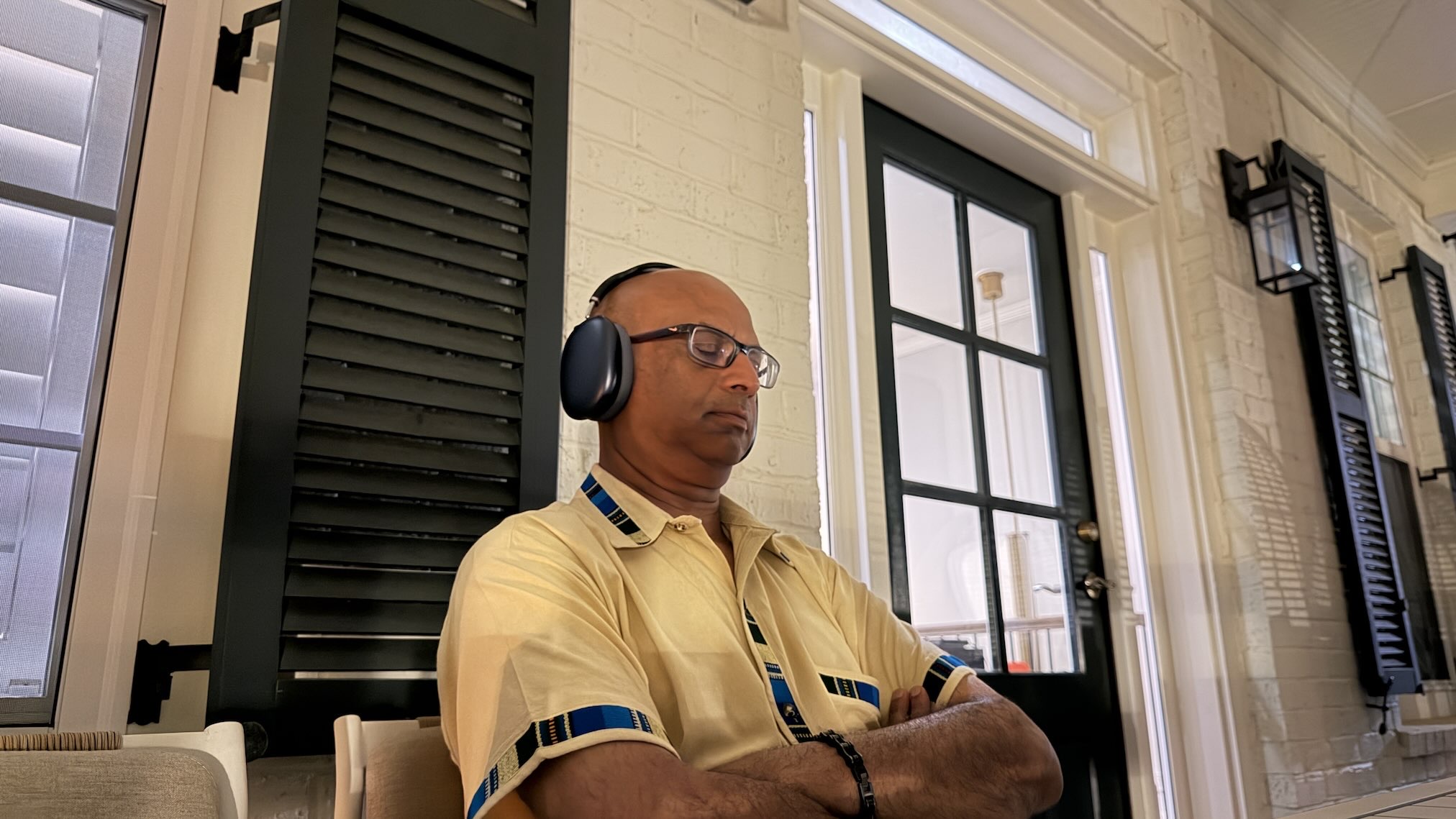
An evening with old classical music
Book Review: Hidden Potential by Adam Grant
I had picked up this book at an airport store on my way to Uruguay. I was impressed by another of his books – Think Again. This one did not disappoint either.
He dives into how to bring out the potential in every human being, of oneself, as well as bringing the same out in others. In the process, he breaks down a few myths and misperceptions.
The biggest one is how we judge and elevate people based on peak performance, not the journey there. The point is that if you want to understand a person’s full potential, it is not about the peak reached but about how much one has traversed to get there.
For oneself, he asserts that we stop learning as we grow up because we are unwilling to embrace the awkwardness of learning. Imagine picking up a new language. We wait to become experts before we feel ready to talk to native speakers. But the process of becoming an expert goes right through the heart of talking to native speakers while you are learning – and in the process overcoming the fear of making mistakes and being awkward.
He also asserts that to achieve full potential, one needs to accept imperfection. (the art of Wabi Sabi). Trying to be perfect will lead one down a very narrow path instead of developing new ones. He quotes this art of balancing the flawed with the flawless in words that appealed to me:
“There is a crack, crack in everything
That’s how the light gets in.”
Another important concept he stresses is that the path to full potential will not be linear. You will get stuck, have to back out, and then seek alternate paths. If you are not getting stuck, you are not on a path of full potential. “The roundabout path to forward progress”, as he says.
When it comes to helping others reach their full potential, he has a couple of important pieces of advice for all leaders. First, focus on what makes a great team, and it is not the same as putting great individuals together. The other is to judge a person’s character more than their talent. Talent sets the floor, but character sets the floor.
What is character? The author says that character is often confused with personality, but they’re not the same. Personality is your predisposition. Your basic instinct for how to think, feel, and act. Character is your capacity to prioritize your values over your instincts.
Some interesting direct quotes:
“Getting better is a worthy accomplishment in and of itself.”
“Ambition is the outcome you want to achieve. Aspiration is the person you hope to become.”
“Teaching is a surprisingly powerful method of learning.”

Reflected glory
Dreary winter
The sharper edges of winter
The houses of KLM
Sharmila and Nikita traveled to India by KLM. Which meant I got to add to my collection of KLM houses. I had even given them the list of house numbers that I have, so they will not pick up a duplicate. 🙂
They publish one new replica of some famous houses/buildings in Netherlands every year – I believe on their annual anniversary day of existence. I have long ways to go!!

A prized possession in my antique collection
Sharmila and Nikita are back from India. Looks like, together with my mother-in-law, they dug up my late father-in-law’s stuff and got one of his prized possessions – a Yashica-D camera. He was an avid photographer back then. This is from the late 50s – nearly three-quarters of a century old! I think it was one of the first twin-lens reflex cameras.
It has now been added to my small but growing collection of things that most folks today would not recognize, nor know how to operate!

Book Review: The Chaos Machine by Max Fisher
I forget how I landed up with this book. I think I was reading an article in The Economist that mentioned this book.
It is a fascinating book to understand what causes some of the grave ills of social media. I used to see all the young kids constantly on their phones. But from The Economist article, I learnt that constant social media doomscrolling is affecting the older generation even worse.
The author does not delve very deep into certain aspects of psychiatric issues caused by social media, like loneliness, anxiety, and so on. Instead, he focuses much more on how social media causes mass hysteria around conspiracy theories and deep echo chambers, to the point that ordinary people are becoming unhinged from reality.
He has studied Facebook and YouTube in the greatest detail. Interestingly, not much analysis of TikTok was presented, but he suggests that its algorithms are doing exactly the same.
It stems from the social media company single-mindedly chasing screen time – or the user’s attention. This is clearly driven by profit motives (ad revenue is proportional to the time you spend on an app or site).
As a second step, the social media companies created algorithms to feed you more stuff that they deem will keep you on the screen. The algorithms have developed this magic by constantly studying the behavior of millions of human beings. In and of itself, it does not have any value judgment – but a very good idea – based on data, what will make you stay on the screen.
And the third part is the foible of us human beings. We are attracted to salacious news items. We discount data that goes against our beliefs and instead are likely to believe more data that supports our belief – even after we are told that the data source is spurious!! And if enough people say it, we take it as a cardinal truth.
All this, when done on a large scale – where no human being can truly understand the AI algorithm’s complexity anymore – leads to extreme behavior from human beings. To the point, people have killed people – and in extreme cases, genocides like that in Myanmar – purely based on believing something to be true since the algorithms kept feeding one kind of item only.
The author has a strong point of view: owners of social media need to bear significant responsibility for this and should be held accountable. The owners, on the other hand, claim that it would be a violation of free speech. They have sometimes taken action when faced with political or social pressure, but things regressed soon after.
I think the problem manifestation is clear (people are killing people, and human beings are suffering from deep psychological issues – this is undeniable). However, the solution is equally unclear. In fact, the author does not seem to offer any elegant solution beyond suggesting that we hold social media owners responsible for what their algorithms do.
I would recommend reading this book.

I wish you enough!
Keeping up with my tradition of starting the year by “wishing you enough”. A message worth repeating every year. As a person who arguably spends more time in airports than home and as somebody who spends time in hospices with folks who regularly say their “forever goodbyes”, the story and the moral of the story rings very true to me.
Even if you have read it last year, it is a great read again. Also acknowledging Larry Mason who had originally wished me enough…
“I wish you enough!”
By Bob Perks
———————–
I never really thought that I’d spend as much time in airports as I do. I don’t know why. I always wanted to be famous and that would mean lots of travel. But I’m not famous, yet I do see more than my share of airports.
I love them and I hate them. I love them because of the people I get to watch. But they are also the same reason why I hate airports. It all comes down to “hello” and “goodbye.”I must have mentioned this a few times while writing my stories for you.
I have great difficulties with saying goodbye. Even as I write this I am experiencing that pounding sensation in my heart. If I am watching such a scene in a movie I am affected so much that I need to sit up and take a few deep breaths. So when faced with a challenge in my life I have been known to go to our local airport and watch people say goodbye. I figure nothing that is happening to me at the time could be as bad as having to say goodbye.
Watching people cling to each other, crying, and holding each other in that last embrace makes me appreciate what I have even more. Seeing them finally pull apart, extending their arms until the tips of their fingers are the last to let go, is an image that stays forefront in my mind throughout the day.
On one of my recent business trips, when I arrived at the counter to check in, the woman said, “How are you today?” I replied, “I am missing my wife already and I haven’t even said goodbye.”
She then looked at my ticket and began to ask, “How long will you…Oh, my God. You will only be gone three days!” We all laughed. My problem was I still had to say goodbye.
But I learn from goodbye moments, too.
Recently I overheard a father and daughter in their last moments together. They had announced her departure and standing near the security gate, they hugged and he said, “I love you. I wish you enough.” She in turn said, “Daddy, our life together has been more than enough. Your love is all I ever needed. I wish you enough, too, Daddy.”
They kissed and she left. He walked over toward the window where I was seated. Standing there I could see he wanted and needed to cry. I tried not to intrude on his privacy, but he welcomed me in by asking, “Did you ever say goodbye to someone knowing it would be forever?”
“Yes, I have,” I replied. Saying that brought back memories I had of expressing my love and appreciation for all my Dad had done for me. Recognizing that his days were limited, I took the time to tell him face to face how much he meant to me.
So I knew what this man was experiencing.
“Forgive me for asking, but why is this a forever goodbye?” I asked.
“I am old and she lives much too far away. I have challenges ahead and the reality is, the next trip back would be for my funeral,” he said.
“When you were saying goodbye I heard you say, “I wish you enough.” May I ask what that means?”
He began to smile. “That’s a wish that has been handed down from other generations. My parents used to say it to everyone.” He paused for a moment and looking up as if trying to remember it in detail, he smiled even more.” When we said ‘I wish you enough,’ we were wanting the other person to have a life filled with just enough good things to sustain them,” he continued and then turning toward me he shared the following as if he were reciting it from memory.
“I wish you enough sun to keep your attitude bright.
I wish you enough rain to appreciate the sun more.
I wish you enough happiness to keep your spirit alive.
I wish you enough pain so that the smallest joys in life appear much bigger.
I wish you enough gain to satisfy your wanting.
I wish you enough loss to appreciate all that you possess.
I wish enough “Hello’s” to get you through the final “Goodbye.”
He then began to sob and walked away.
—
My friends, for 2026, I wish you enough!