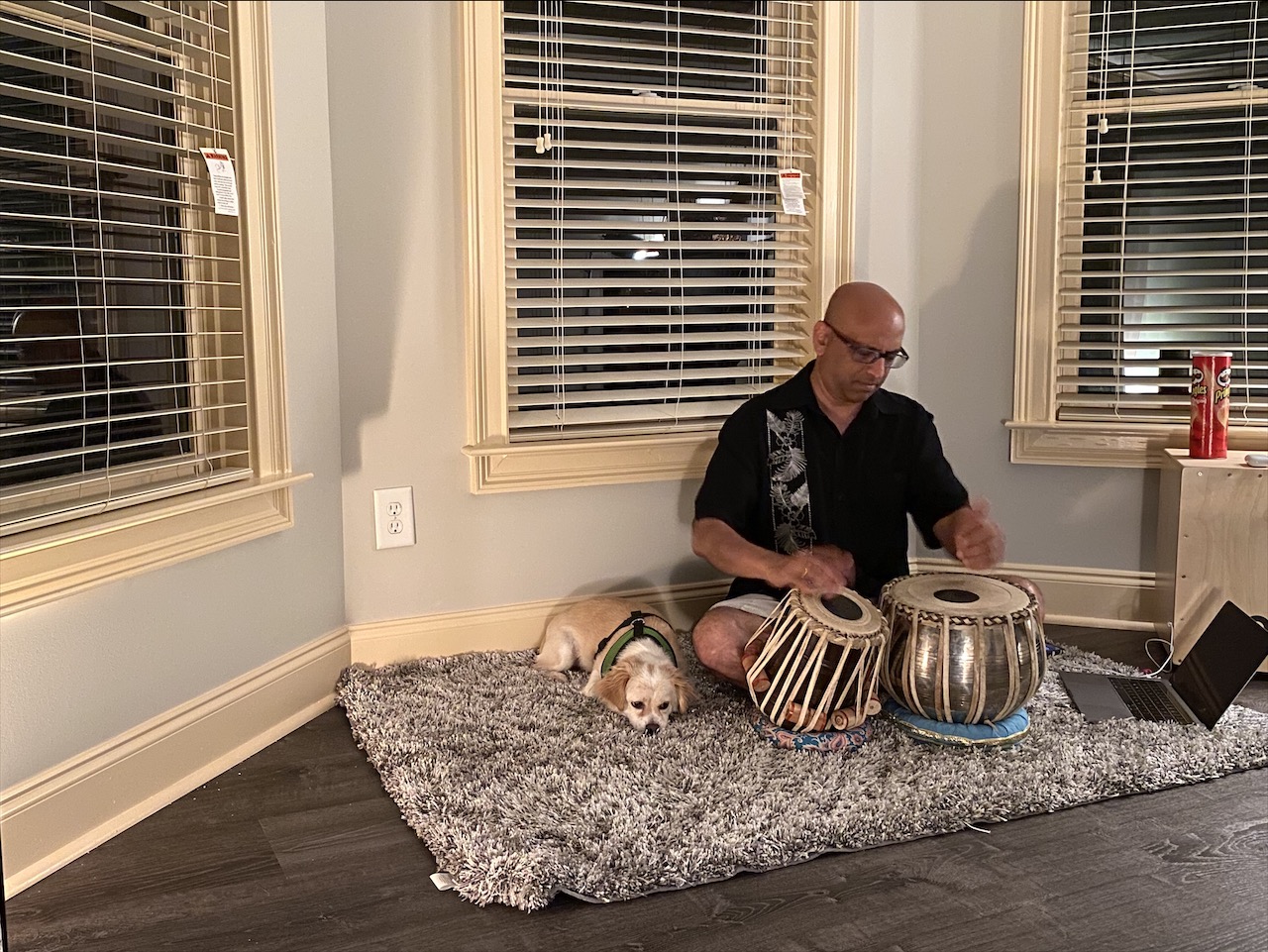
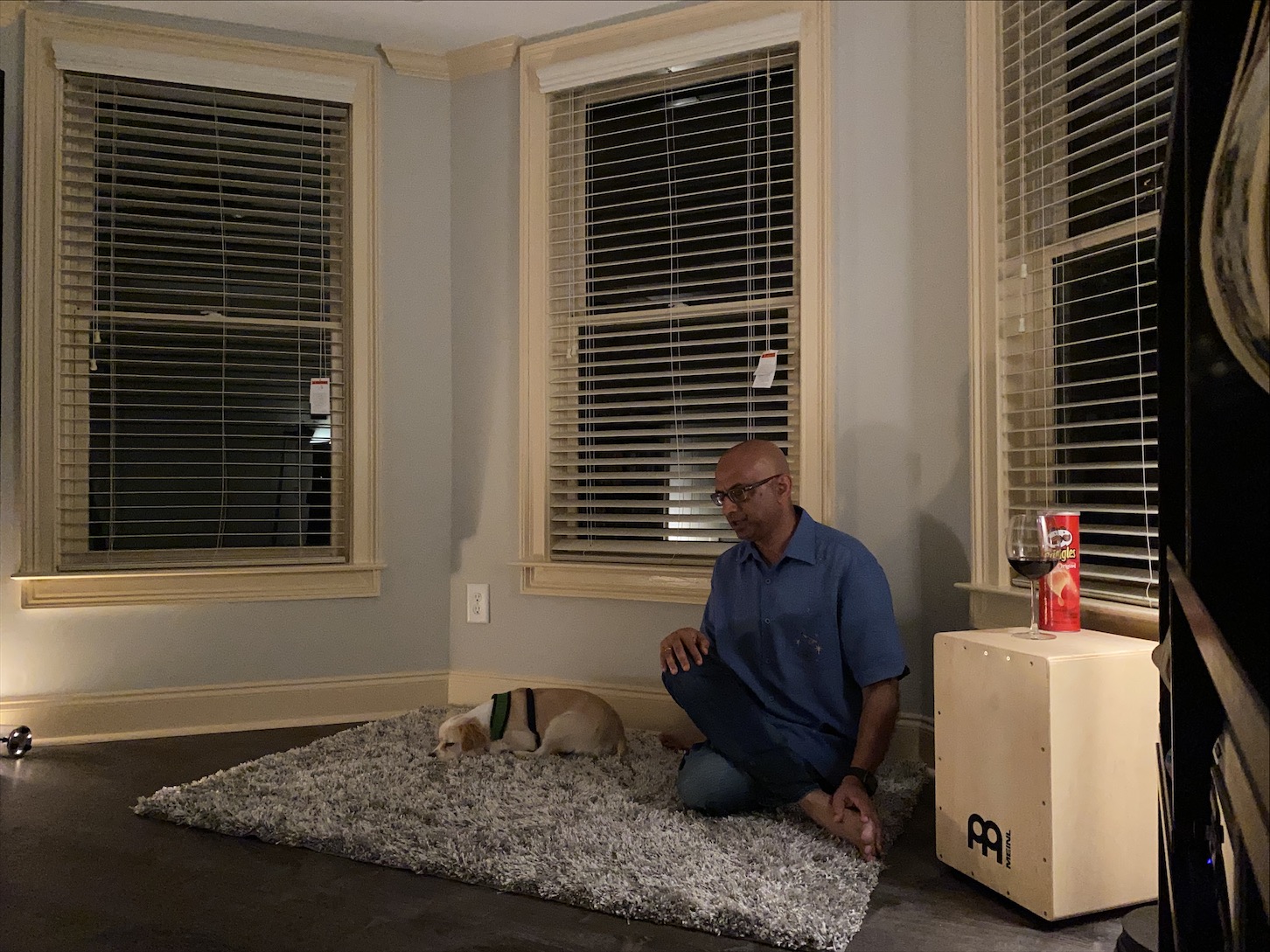
15 August 2020

In Iqbal’s words…

“Subh-e-Azal ye mujh se kaha Jibraeel ne,

Jo akal ka ghulam ho, woh dil na kar qabool.”

These are words from the immortal poet Allama Iqbal (Muhammad Iqbal). Iqbal, who is the national poet of Pakistan (I think his birthday used to be a national holiday in Pakistan but no more), is widely respected for his poetry in all Farsi, Urdu and Hindi speaking countries in Asia.

Jibraeel is the archangel in Islam that corresponds to Gabriel in all Abrahamic religions (Judaism, Christianity, Modern Day Saints …). The meaning of the lines are:

“At the dawn of creation, Gabriel (Jibraeel) said this to me
Do not ever accept a heart that has surrendered to the mind”
31 July 2020

Throwback to forty years back

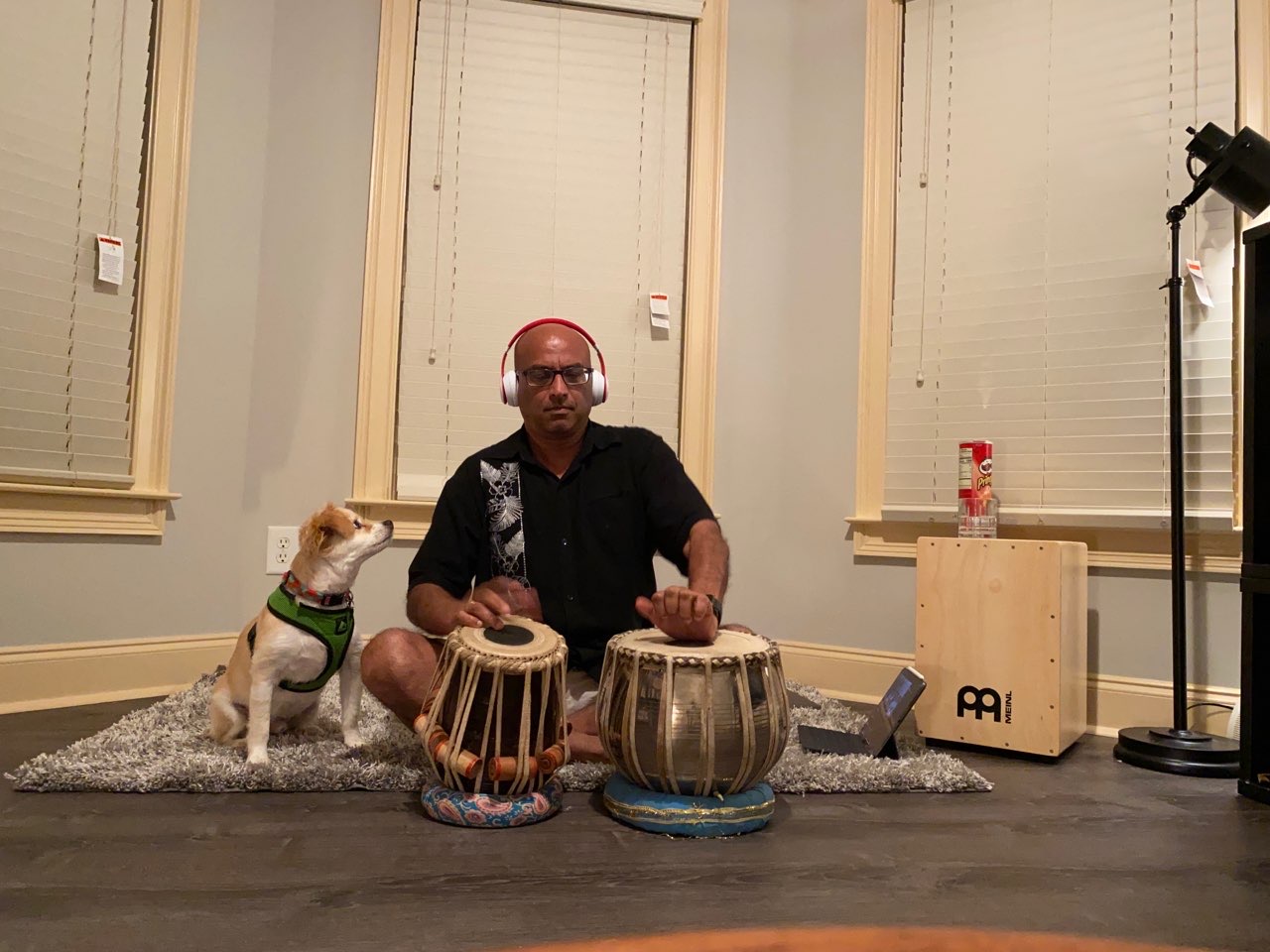
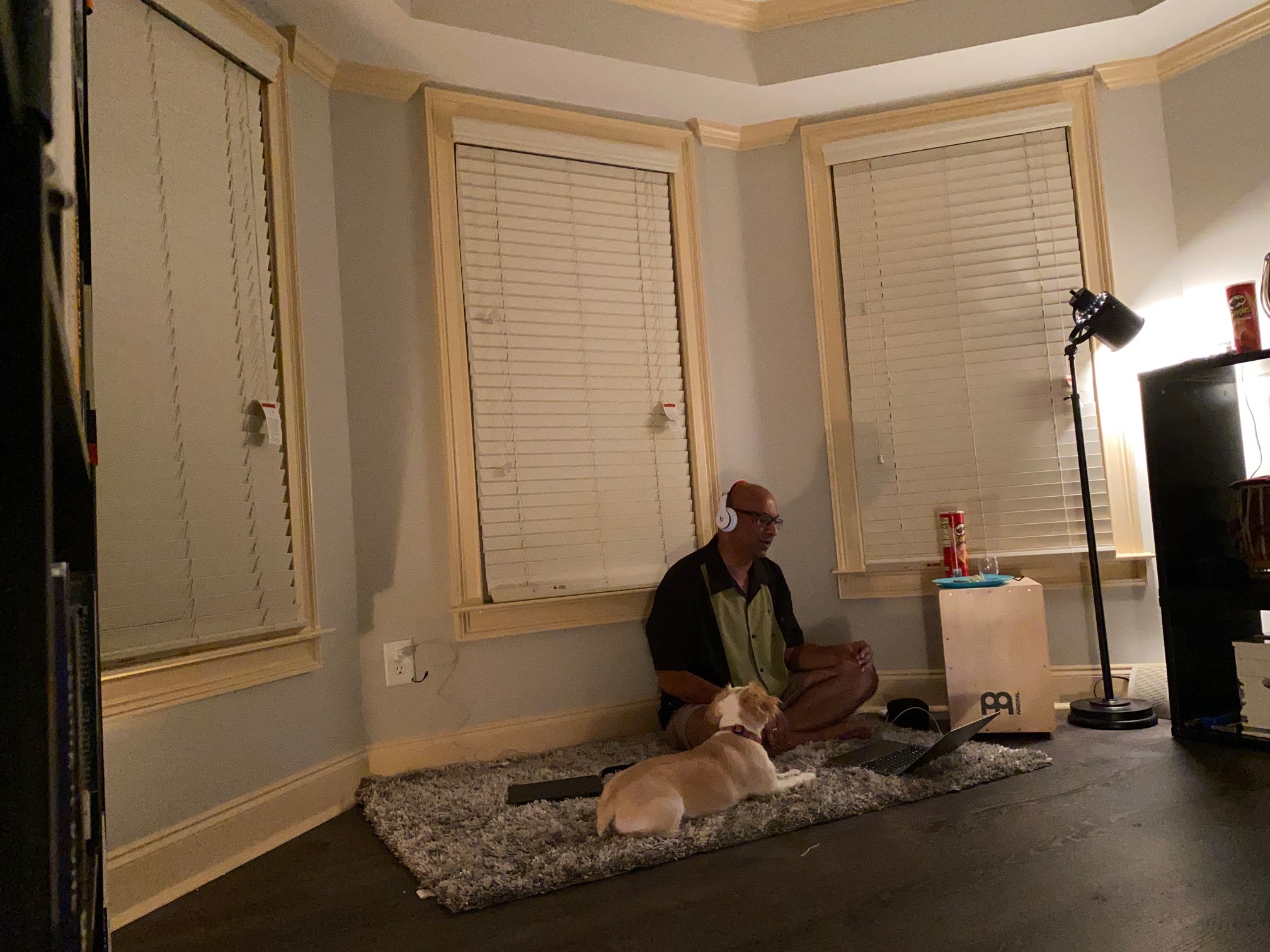
I remember in 1980 my sister had learnt how to sing this song. And I had accompanied her on the tabla. That was forty years back. The words and the tune are by the famous Bengali poet – Nazrul Islam.

“Musafir! mochh re aankhijol
Phirey chol aponaarey niya
Aponi phhutechhilo phool
Giyaachhhey aponi jhoriya

Re pagol! Eki durasha
Jol-e tui bnadhbi baasa
Metey na hetaa-y piyasa
Heta naai trishna doriya”

Roughly translated…

“Oh wayfarer! wipe your tears
Let’s return; collect yourself
The flower that had bloomed itself
Has also shed on its own

Oh madcap! what insane hope is this
That you will build your home on water
Your thirst won’t be quenched here
There is no fountain of elixir here”

19 July 2020

Saturday evening relaxation

“Pehlu Mein Hai Raqib Tumhare Khuda Ki Shaan
Kaanta Bi Hai Woheen Pe Jahan Pe Gulaab Hai
Kehte Hain Jaam Bhar Ke Woh Kaisi Adaa Ke Saath
Pee Lo Humaare Hath Se Peena Sawaab Hai”

I will need some help in translating the first line (or for that matter, all the lines) from somebody who is well versed in Urdu. I think it goes something like this…

“God’s grace is (unfortunately) on your rival’s side // raqib often refers to your rival with who you are vying for the lady’s attention
When you find a rose, there will be thorns too // meaning a thing of beauty will always come with pain
Filling my glass with wine, she says playfully
Drink from my own hand; drinking is my reward” // meaning your only reward is that you get to drink the wine she is serving

2 July 2020

Beautiful poetry from Allama Muhammad Iqbal

“Sitaron se aage jahaan aur bhi hain
Abhi ishq ke imtihan aur bhi hain
Har ek maqam se aage maqam hai tera
Hayat zauq-e-safar ke siwa kuch aur nahin”

Roughly translated…

There is a universe beyond the stars we behold
There are even more tests of our love awaiting us
Your destination is beyond every known destination
The entire joy of life is in the journey itself ! (Not the destination)

20 June 2020

In remembrance of all those people who have meant something to me…

Being on the other side of 50, song choices are often rooted in nostalgia. This evening’s song is dedicated to all those folks that have crossed my path – influenced me in so many ways – some small, some big – and I never got a chance to cross their paths again – to say a simple “Thank You.” My life was enriched by every such friend I have had, their parents who often guided me, my teachers, my family, those strangers who often left a big mark on me, those who became very close to me and then became strangers, my colleagues, those fellow passengers, those random foks that I met at restaurants, bars and streets… in so many ways, life has been nothing but an enriching collage of those meetings…

From the pen of Anand Bakshi..

“Zindagi ke safar mein
Guzaar jate hain jo makaam
Woh phir nahin aate.
 
Phool khilte hain, log milte hain, magar
Patjhad main jo phool murjha jate hain
Woh baharon ke aane se khilte nahin

Kuchh log ek roz jo bichad jate hain
Wo hazaron ke aane se milte nahin
Umr bhar chahe koi pukara kare unka naam

Woh phir nahin aate”

Roughly translated (improvements welcome)

In this caravan of life, all those places you pass…
They never come back again!

Flowers bloom; people meet; but
That flower that wilted in Fall,
Does not bloom again in Spring

Some people that split paths with you once
Never show up again, despite the milieu that you meet
Try as much as you might call out for them

They never come back again!

14 June 2020

A different kind of musical evening

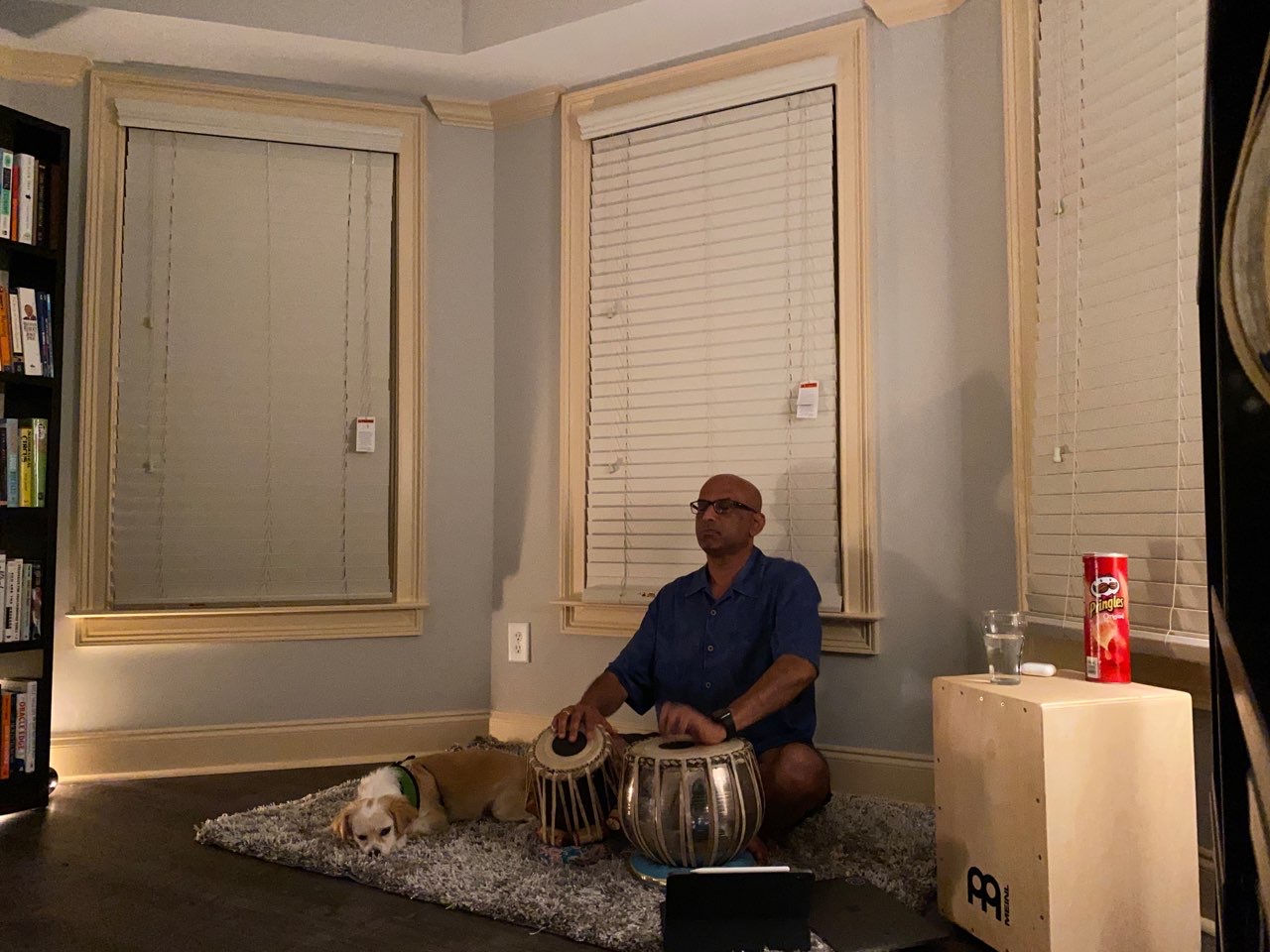
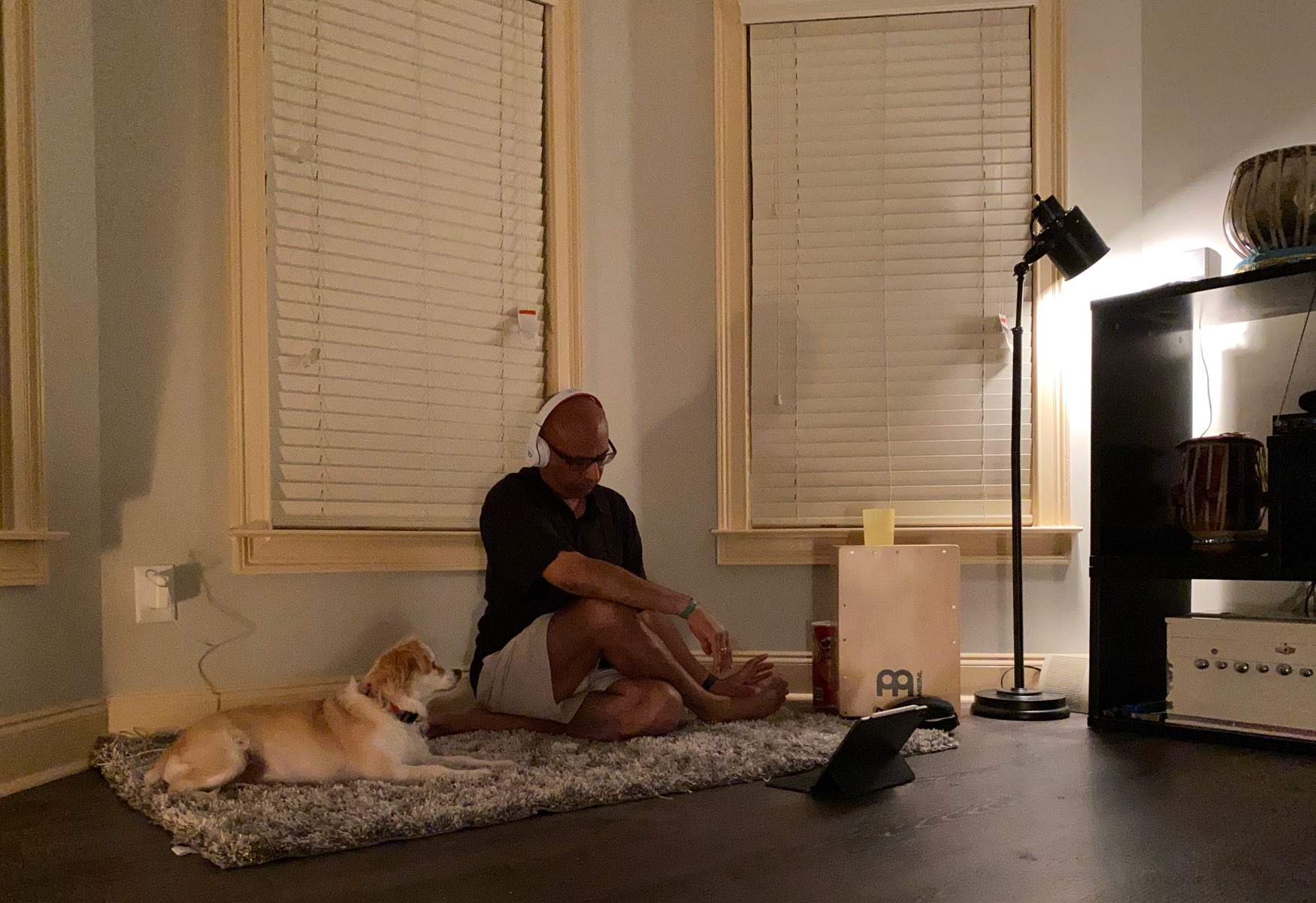
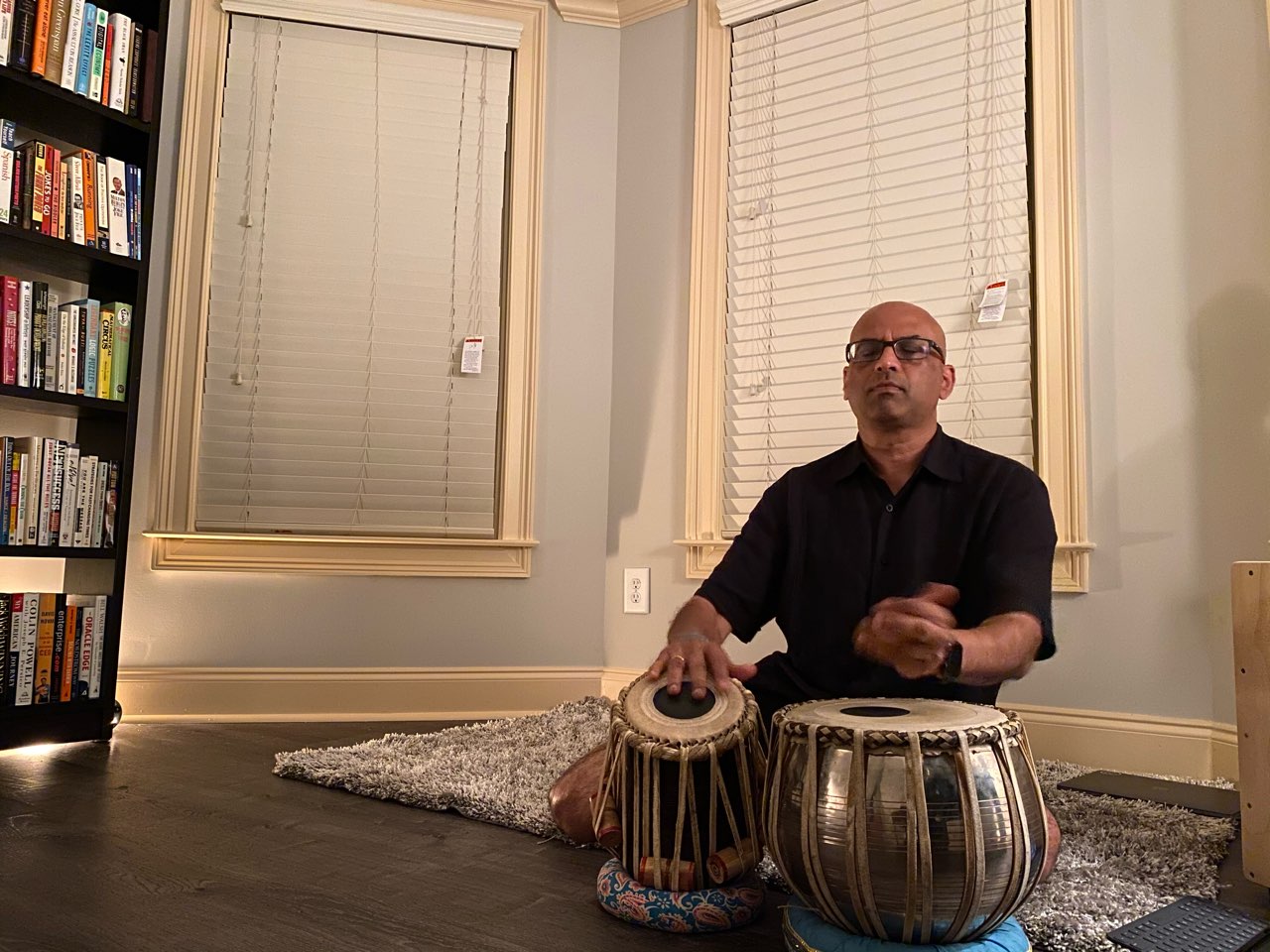
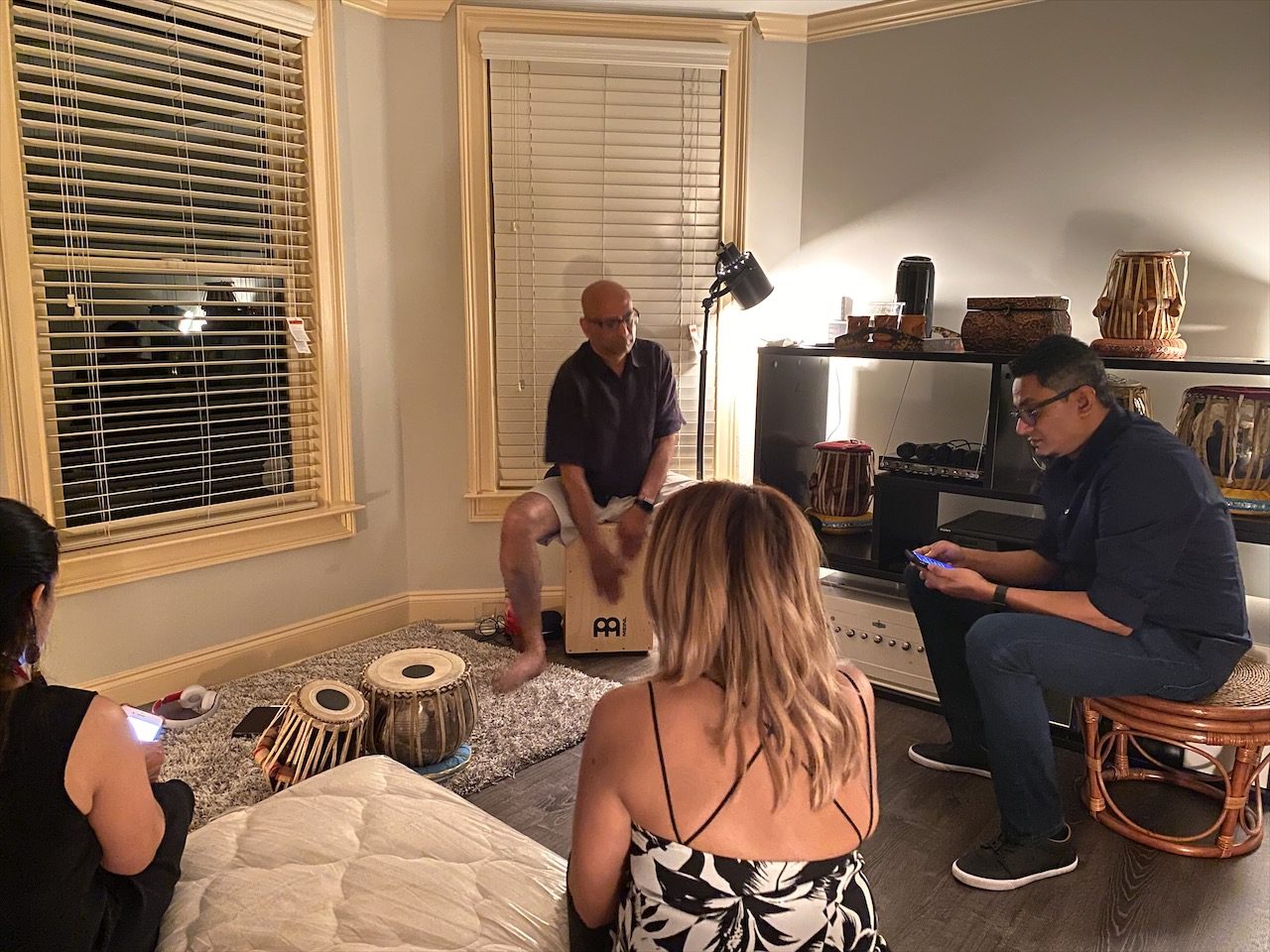
I sat down last evening in my music room (which still has the makeshift bed in it – since that was my quarantine room) and was sifting thru some qawwalis to decide which one to settle in for the evening… when suddenly Parijat and Dipanjan walked in! With their dog Benji!! So, my dog-audience doubled last evening!!

We had a different kind of musical evening. Lot of Western and Spanish music. The cajon accompaniment was with one such Spanish number. I am totally ignorant of Spanish or any Western music but this was Flamenco style, I believe.

One guitar ensemble Dipanjan played from his collection was mesmerizing. I believe the artists were Al di Meola, Paco de Lucia, and John McLaughlin. Again, I am no expert but that was incredibly fast playing.

30 May 2020

Friday evening came a day late

Sat for my music evening a day late today. The song of choice for this evening was a poem written by Obaidullah Aleem. Born in Bhopal, India, the poet emigrated to Pakistan early in his life when his family moved and eventually died in Karachi, Pakistan. The rendition for this evening was by Ghulam Ali.

“Kuch din to baso meri aankhon mein
Phir khwab agar ho jao to kya

Koi rang to do mere chehere ko
Phir zakhm agar mehkao to kya

Aik aina tha so toot gaya
Ab khud se agar sharmao to kya

Main tanha tha main tanha hoon
Tum aao to kya na aao to kya

Jab hum hi na mehke phir sahib
Tum baad-e-saba kehlao to kya

Jab dekhne wala koi nai
Bujh jao to kya jal jao to kya”

Roughly translated…

“Stay in my eyes for a few more precious moments,
Then if you turn out to be a dream, who really cares?

Give me some (red) color in my cheeks with your presence
Then if it turns to be blood from your hurt, who really cares?

There was a mirror we had (of love), now it is all broken
Now if you blush at your own self, who really cares?

I was lonely then and I am lonely now
You may come. You may not. Who really cares?

When I am myself not there in the garden to enjoy it,
You can blow like the fresh morning breeze, who really cares?

When there is nobody around to see it,
You can glow in love or be dark, who really cares?”

22 May 2020

Relaxing on a Friday evening with a Rabindrasangeet

“Bhalobesey sakhi nibhritey jotoney
Aamar naam-ti likho, tomar monero mondir-e
Amaro poran-e je gaan baajhichhe
Tahar taal-ti sikho, tomar chorono monjeer-e”

“Out of old affection, gently and quietly
Do inscribe my name in the temple of your soul
Of that song that invariably sways my heart
Do teach your anklets how to dance to the rhythm”

17 May 2020

Couple of interesting poems from Tao Te Ching

Now reading Taoism in that book Religions of Man. I had very little understanding of Taoism before this. One of the key learnings I had was Taoism’s focus on “creative quietude” (wu wei). In chapter 78 in the book Tao Te Ching (by founder Lao Tzu), is a great poem comparing the virtues of water – infinitely supple yet incomparably strong – to wu wei. (in the context of water eroding away rocks)

“What is more fluid, more yielding than water?
Yet back it comes again, wearing down the tough strength
Which cannot move to withstand it.
So it is that the strong yield to the weak,
The haughty, to the humble.
This we know.
But never learn.”

There is another poem in Chapter 17, that I had read before but never realized that the source is the original book of Taoism.

“A leader is best
When people barely know that he exists
… Of a good leader, who talks little
When is work is done, his aim fulfilled,
They will all say, ‘We did this ourselves’ ”

12 May 2020

Poem by Seng Ts’an (also written Sengcan)

I am reading this book called “Religions of Man”. It is a fascinating book and I will write the review later. I just finished up with Hinduism and Buddhism. Have another six religions to go.

This poem is by Seng Ts’an. As I was reading up about him in Wikipedia, found this amazing story of how he – well into his forties – met the monk who eventually became his teacher and gave him the name Seng Ts’an (gem monk). Their interaction (like many koans in Zen Buddhism) went something like this:

Seng Ts’an: I am riddled with sickness. Please absolve me of my sin.
Huike: Bring your sin here and I will absolve you.
Seng Ts’an (after a long pause): When I look for my sin, I cannot find it.
Huike: I have absolved you. You should live by the Buddha, the Dharma, and the Sangha

Any way, the poem called “Trust in the Heart” goes the following way:

The Perfect Way is only difficult for those who pick and choose
Do not like, do not dislike, all will then be clear,
Make a hairbreadth difference, and Heaven and Earth are set apart;
If you want the truth to stand clear before you, never be for or against.
The struggle between “for” and “against” is the mind’s worst disease.
Do not try to drive pain away by pretending that it is not real;
Pain, if you seek serenity in Oneness, will vanish of its own accord.
Thoughts that are fettered turn from Truth,
Sink into the unwise habit of “not liking.”
“Not liking” brings weariness of spirit; estrangements serve no purpose.
The One is non other than the A;;. the All none other than the One.
Take your stand on this, and the rest will follow of its accord;
To trust in the Heart is the “Not Two”, the “Not Two’ is to trust in the Heart
I have spoken, but in vain; for what can words tell
Of things that have no yesterday, tomorrow or today.