2 May 2015

When my footfalls will be no more in this world.

Growing up in a family immersed in music in Bengal, Rabindrasangeet (songs by Tagore) was as much a staple diet for me as was rice and potatoes. And yet, unlike most Bengalis, I never took to Rabindrasangeet. (I liked more classical based songs like Nazrulgeeti). If you are not from Bengal, you probably have very little idea how blasphemous that statement is in Bengal. That is like saying I don’t like “rosogollas” (a local sweet). Which, I don’t by the way.

If you ask my dad what are his biggest disappointments about me he would cite – not necessarily in that order (i) I live in a rural setting (he thinks I have regressed in the financial progress he made when he moved from a village to a town in Bengal) (ii) I run (he thinks if I ever prosper, I will have people running around for me – I do not have to run) and (iii) I don’t like Rabindrasangeet (he thinks Rabindranath was the greatest poet ever in the world – although when I asked him to name a few more poets of the world that he had read the poems of, he admitted – “none”).

Many years later, a close friend of mine, who is also a singer, had once told me that as I grew older, she thought I would start liking Rabindrasangeet more and more. I have indeed grown to realize that she was right. I still don’t listen to Rabindrasangeet much, but when I do, I do spend the whole evening enjoying them. Today was such an evening.

The song of the evening was –
“Jokhon porbe na mor paayer chinho ei batey,
Ami baibo na – ami baibo na mor kheya-tori ei ghaatey, go.
Jokhon porbe na mor paayer chinho ei batey…
Chukiye debo becha-kena,
Mitiye debo go, mitiye debo lena-dena,
Bondho hobey anagona ei hatey –
Tokhon amay naiba money raakhley,
Taarar paane chheye-chheye naiba aamay daakley.
Jokhon porbe na mor paayer chinho ei batey”

This is my mother tongue but translating is more difficult for me. (Perhaps I can understand the deeper meaning even better or perhaps because I am simply not that good in English. Perhaps both.)
But here is an attempt:

When there will be no more signs of my footfalls on this ground
When I will not be mooring my boat anymore into this dock
When there will be no more signs of my footfalls on this ground
(When) I would have concluded all my business here
(When) I would have wrapped up all my trades here
(When) All my treks to this marketplace would come to a finish
(Then) What is the harm if I did not come to your mind any more
(Then) What is the harm if you did not long at the stars at night and whispered out my name softly
When there will be no more signs of my footfalls on this ground
25 April 2015

The percussion puritan is bound to disapprove of this

Another Friday evening. Another decompression. Heaven knows I needed this.

Today was about Bengali folk songs. Missed the music sessions with my sister a couple of decades back.

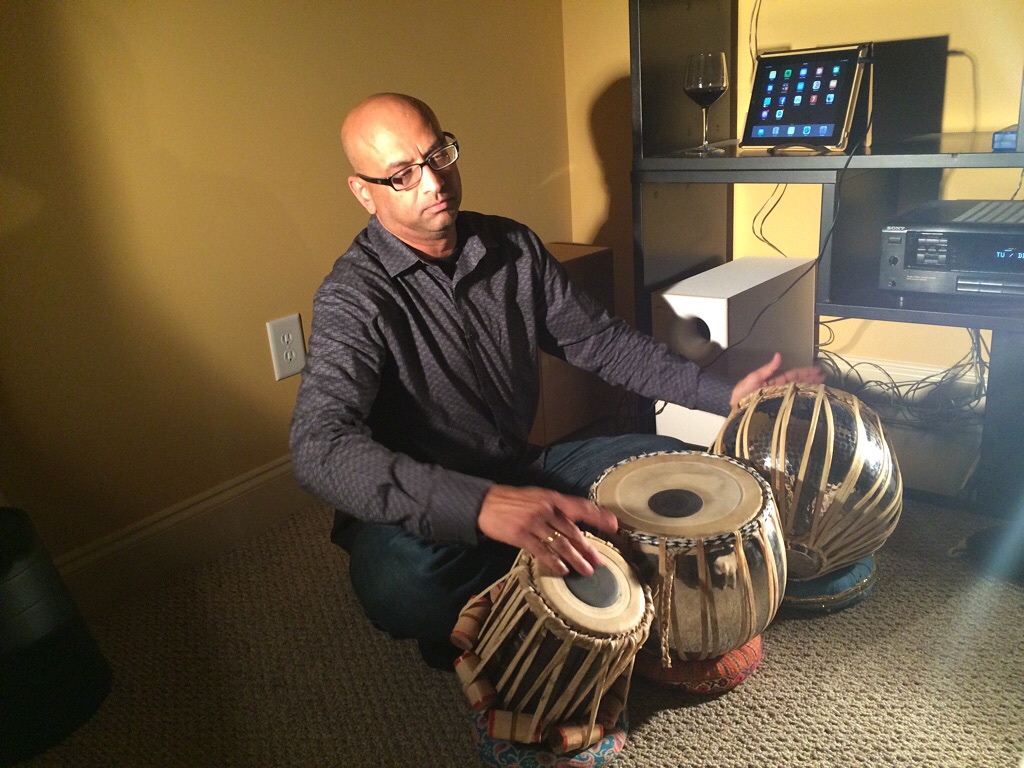
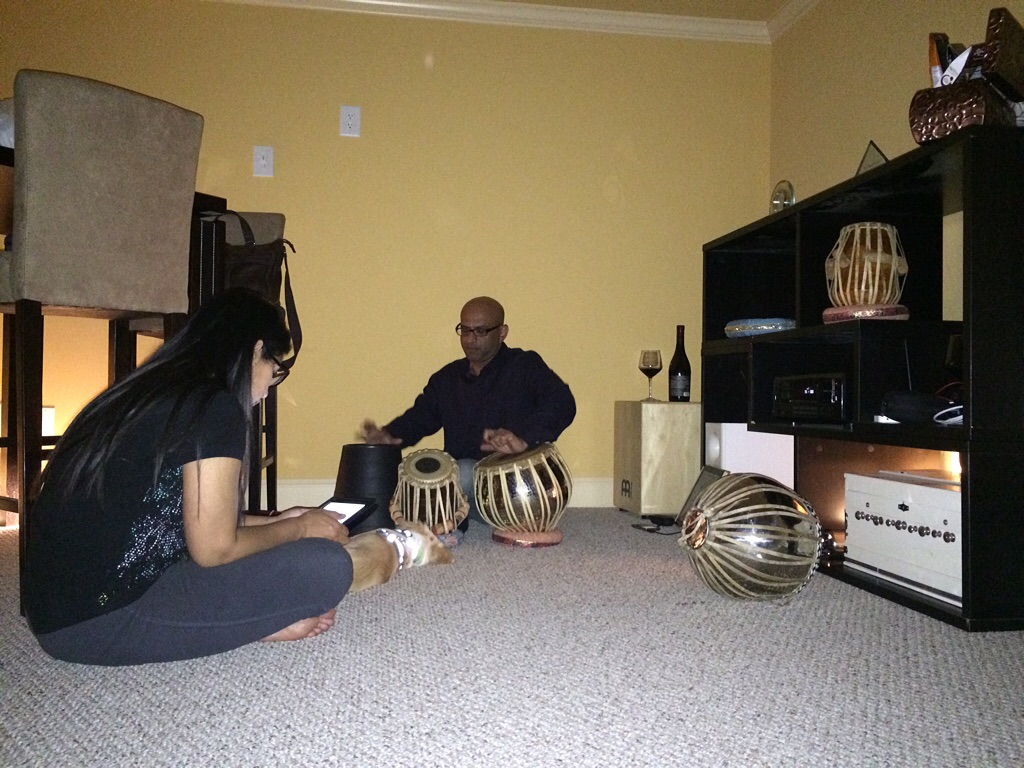
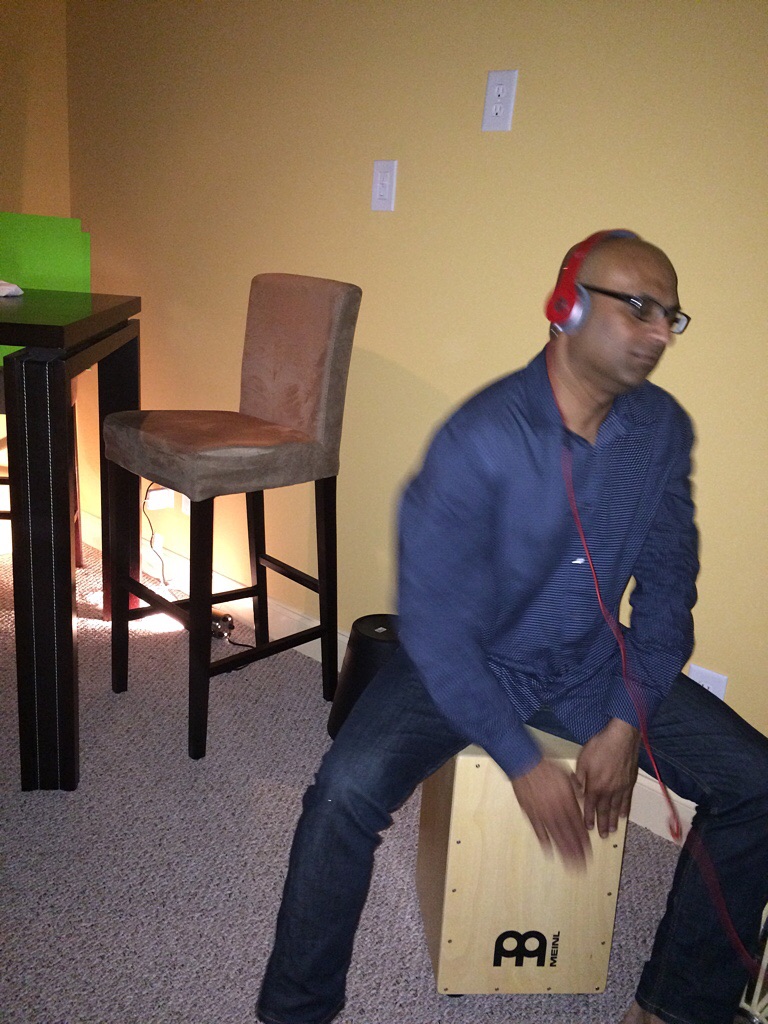
This is not going to warm the cockles of the heart of any percussion puritan… but there was an excellent application of a $1.99 plastic trash basket Sharmila had put in my music room (with the “bnayaa”) for a nice Utpalendu number (“Dohai Matha Khao”). Sometimes beats can come from the most innocuous item!!!

image

18 April 2015

“This is where we sing together”

Friday evening. Time to decompress.

This evening’s song was “Daanah Pah Daanah”. I would be extremely surprised if any of my Facebook friends recognized this song.

I come from a country that post-birthing-pangs of 1947 has considered everything Pakistan to be its enemy (you should see the emotion of both the countries when they play a simple game of cricket). I have adopted as my country that, post-2001, considers everything Pakistan as Bin Laden, “terrorism” and general backwardness.

While much of it can be factually backed up, what might get lost is some of the goodness – the pure humaneness – that exists there just like everywhere else. Akhtar Chanal Zahri – a 60+ year poet and singer from the area called Baluchistan represents a great example of that goodness. He focussed his entire life on writing songs about shepherds and sheep grazing on the vast grassland of Baluch area (his birthplace). “Daanah Paa Daanah” is a song he wrote in the local language “Brahui”.

In 2011, Coke Studio featured him. As was the practice of Coke Studio, they pulled a local talent from the field like Akhtar and matched him with a very well renowned (at least in Pakistan) actress-cum-singer like Komal Rizvi and gave them about 12 hours of time to practice together and then put them on the air.

The result was magic. Check it out at https://www.youtube.com/watch?v=u3F7kcLrGvA

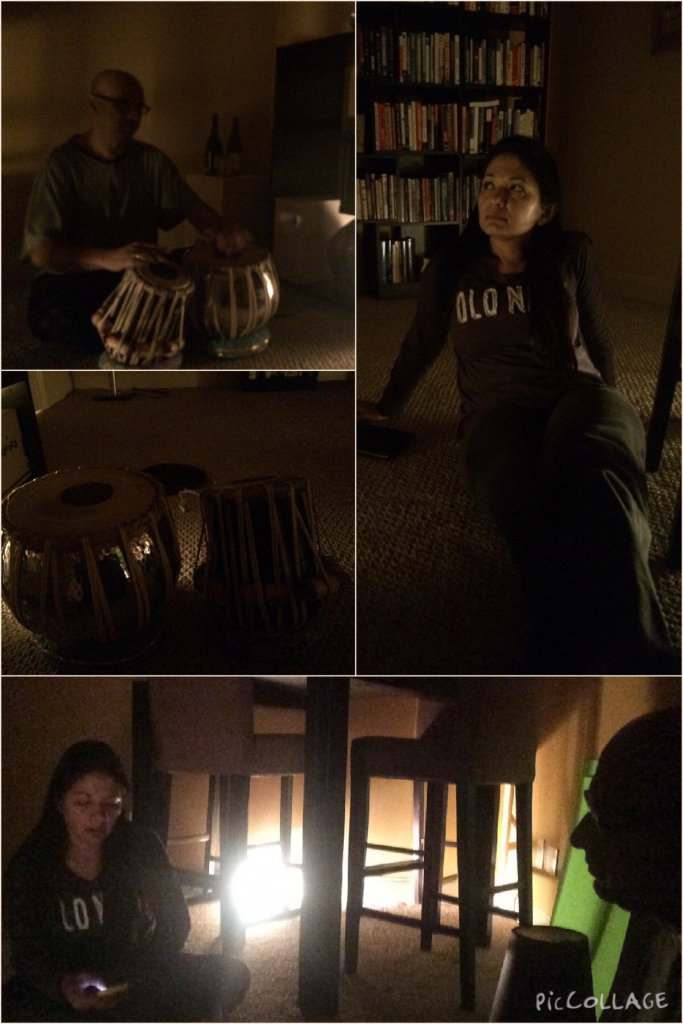
I am not going to translate the song in the hope that the music (tune) he gave is something that we can come together on. But notice what happens in the video at around 3:18. The discerning would realize that Akhtar had lost his cue. Komal, without missing a beat, keeps singing and looks at him with that “This is where we sing together” look. Akhtar, realizing this, smoothly joins in.

In most personal relationships as well the complex geopolitical ones, how many times do we look at each other and say “This is where we sing together” ?

image

11 April 2015

Winding the week down with Friday evening music

The song of this evening was an unforgettable number sung by Ustad Sultan Khan and Chitra. I know the beautiful tune was given by Sandesh Shandilya but never found out who was the original poet behind the words.

The first two stanzas go thusly…

“Teri yeh surmayi aankhen
Panaahon mein bulaati hain
Kahin se main guzarta hoon
Yahin tak kheench laati hain

Teri yeh pyaar ki khushboo
Mujhe har pal sataati hai
Kahin se main guzarti hoon
Hazaaron gul khilaati hai”

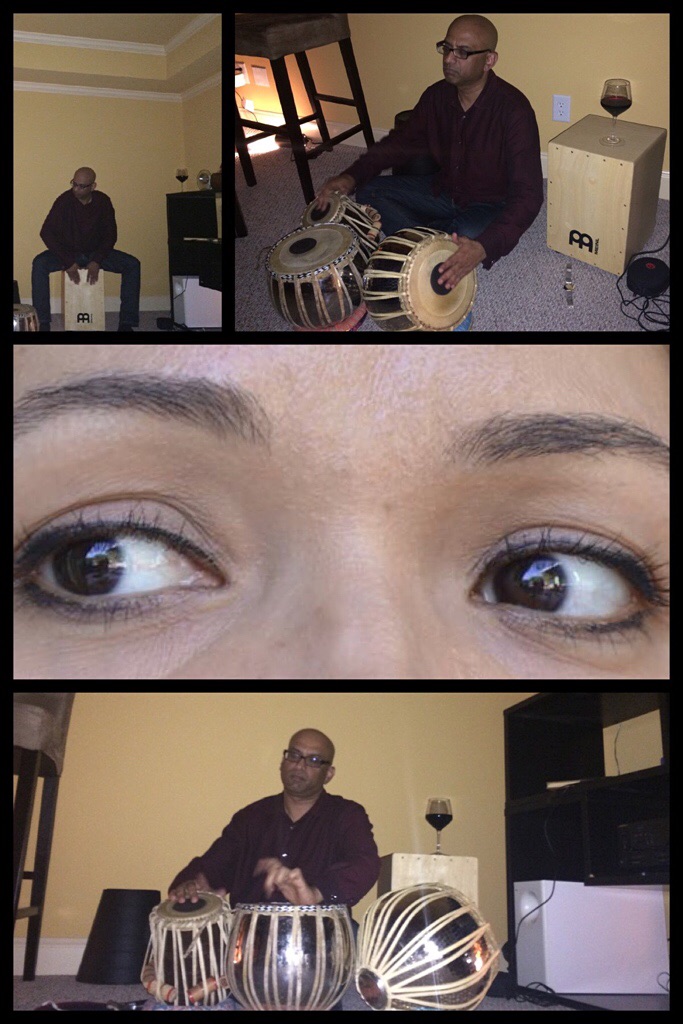
To translate this, I have to explain what “surmayi” is. In Indian (and I think the Middle East and the whole subcontinent), ladies often apply this black stuff under the lower eyelid that accentuates their beautiful eyes. That black “stuff” is called “kohl” in Hindi and “surma” in Urdu. So, “surmayi” is referring to beautiful eyes duly decorated with “surma”.

[Indian ladies, did I do any justice to the term??? Should I have just said a “bold and beautiful version of eyeliner”?]

Anyways, the translation would roughly be…

“Your beautiful “surmayi” eyes,
Keeps beckoning to my world of imagination,
Whichever path I take to escape by,
They (the eyes) drag me right back to here (in front of you)

The sweet fragrance of your love,
Tortures me every single moment of my life,
Whichever path I take to escape by,
It (the fragrance) blooms thousands of flowers (along that path)”

image

28 March 2015

One more time we meet at our intersection point

Friday evening. One more time. Another long, intense week. Another Friday evening of music to wind down… And another Friday evening intersection point to launch another week… Who knows where next week will take me?

In Gulzar’s words…
“Is mod se jaate hain
Kuchh susth kadam raaste, kuchh tej raahe
Patthar ki haveli ko, sheeshe ke gharaundo mein
Tinko ke nasheman tak, is mod se jaate hain

Aandhi ki tarha ud kar, ik raah guzaarti hai
Sharmaati hooyi koyi, kaadmo se utarti hai
In reshmi raaho mein, ik raah to woh hogi
Tum tak jo pahonchti hai, is mod se jaati hai

Ik door se aati ha,i paas aake palat-ti hai
Ik raah akeli si rukti hai, na chalti hai
Ye soch ke baithhi hu, ik raah to woh hogi
Tum tak jo pahonchti, hai is mod se jaati hai”

Somebody with a better grasp of Hindi should be translating this. But here is my attempt with my feeble understanding of the language….

From this (intersection) point traverses
Some very lazy paths, and a few fast paced lanes.
Towards a mansion made of stones, in a house of glass
Or a nest made of straws and twigs, we can go from this point.

One road, like a raging storm, passes by
And another one takes its steps cautiously, demurely
Of all these silken roads, I think to myself, there must be one
That’ll take me to you, when I take that turn

One road comes from far away and then suddenly takes a sharp turn
And there’s another road – rather lonely, that neither stops nor goes anywhere.
And all I do is sit here thinking, that there must be a road out there
That’ll take me to you, when I take that turn

image

7 March 2015

Unwinding on a Friday evening…

… With a few classical qawwalies by the Sabri brothers from Pakistan.

A memorable sher from the “mukhra” of their song “Ab ke saal poonam mein”…

“Tujhse milke bhi dil ko na chain aa saka,
Tujhse milna bhi ik haadsa ho gaya;
Tu nahi tha to furqat ka gham tha mujhe;
Ab ye gham hai ki gham bemazaa ho gaya…”

Here is an attempt at translating it..

“Even after meeting you, my heart could not find any peace
Because meeting you created a whole new problem for me
Without you, I had the constant company of sorrows of separation
Now, with you, my sorrow is that all the fun of separation sorrows has been taken away from me”

12 January 2015

“Naam Gum Jayega”

Sunday evening. Usually it is time for Sharmila and myself to make a beeline to our usual watering hole. Today, we decided to stay in and listen to songs by Sharmila’s all time favorite singer – Bhupinder Singh. Great evening.

One of the songs perhaps captured our feelings from tomorrow morning…The words are by the immortal Gulzaar…

“Waqt ki sitam, kam haseen nahin
Aaj hai yahaan, kal kahin nahin
Waqt se phare agar mil gaye kahin

Jo guzar gayee kal ki baat thi
Umr to nahin ek raat thi
Raat ka silaa agar phir miley kahin”

There is always a danger of translating from a language that is not my mother tongue… But here is my shot…

“The vagaries caused by time, in some ways can be also very beautiful
For today we are here and then nowhere to be found tomorrow
If only we could meet on the other side of time….

Whatever has happened, is a story of the past
It was just a night, not our whole life
If only last night could repeat itself, some other time, somewhere else”

IMG_7093.JPG

7 January 2015

Likh diya is dwar pe!!

This one is by the Pakistani poet Qateel Shifai from the previous century who started his career, of all things, as an unsuccessful businessperson in sporting goods 🙂

This poem (actually I have quoted only part of the poem) can be interpreted as complaining about the then puritan society or the lady herself. I came across this poem because of the adoption of the same as a qawwali by Nusrat Fateh Ali Khan.

“Likh Diya Apne Dwar Pe Kisi Ne
Is Jagah Pyaar Karna Manaa Hai
Pyaar Agar Ho Bhi Jaaye Kisi Ko
Iska Izhaar Karna Manaa Hai

… … …

Hum Ne Ki Arz Ay Banda Parwar
Kyun Sitam Dhaa Rahay Ho Yeh Hum Par
Baat Sun Kar Hamari Woh Boley
Humse Taqraar Karna Mana Hai”

I have tried the translation here assuming the complaint is about the lady herself.

It is as if somebody has inscribed on my door that,
Falling in love here is strictly prohibited
And, should one fall in love in spite of that
Expression of that is surely completely forbidden

… … …

When I question for the sake of humanity
Why inflict so much torture on me?
After listening to me patiently, she replies
“Protesting against me is also forbidden”

3 January 2015

Saqiya Aur Pila

Not sure of the original poet. There are many renditions of this but my favorite is the one by the Sabri Brothers.

“Yay mai ishq hai, pila-ey jah
Do piyale bhar ke de
Saqi mein gulfaam ke, ek apni naam ke
Aur ek Allah ke naam ke
Mita de poori tamanna is dil-e-nakaam ke

Dey dey dey dey dard do mein soorat koi araam ke
Ek ghoont hi pilwaa, magar, josh-e-tamanna daal kar
Ek katra dey, magar katray mein daryia daal kar
Ey saqi tere kher, tere maikade ke kher
Aisi pila ke jish ka nashaa, umr bhar rahey”

My transliterations are not as good as my translations. Urdu, is certainly not my forte. But here is a shot… First, let me explain a few words –
“Saqi” is the lady who serves the “mai” (wine) and often accompanies the customer for a drink in the “maikade” (wine bar)
……..

“This drink is that of love, keep on serving
Fill me up two glasses, if you please
One in your name, O rose-cheeked “Saqi”
And one in the Almighty’s name
(And in that way) Wipe out all the desires of this unfulfilled heart.

Give me some more pain in the guise of comfort
Give me even one sip to drink – but put in it some strong desire
Give me just one drop, but pour a river in that drop
O “Saqi” you be blessed, your “maikade” be blessed
Get me drunk tonight in a way that the intoxication will last me a lifetime”