17 January 2018

From the bartender’s corner: Gin #29 – Ungava

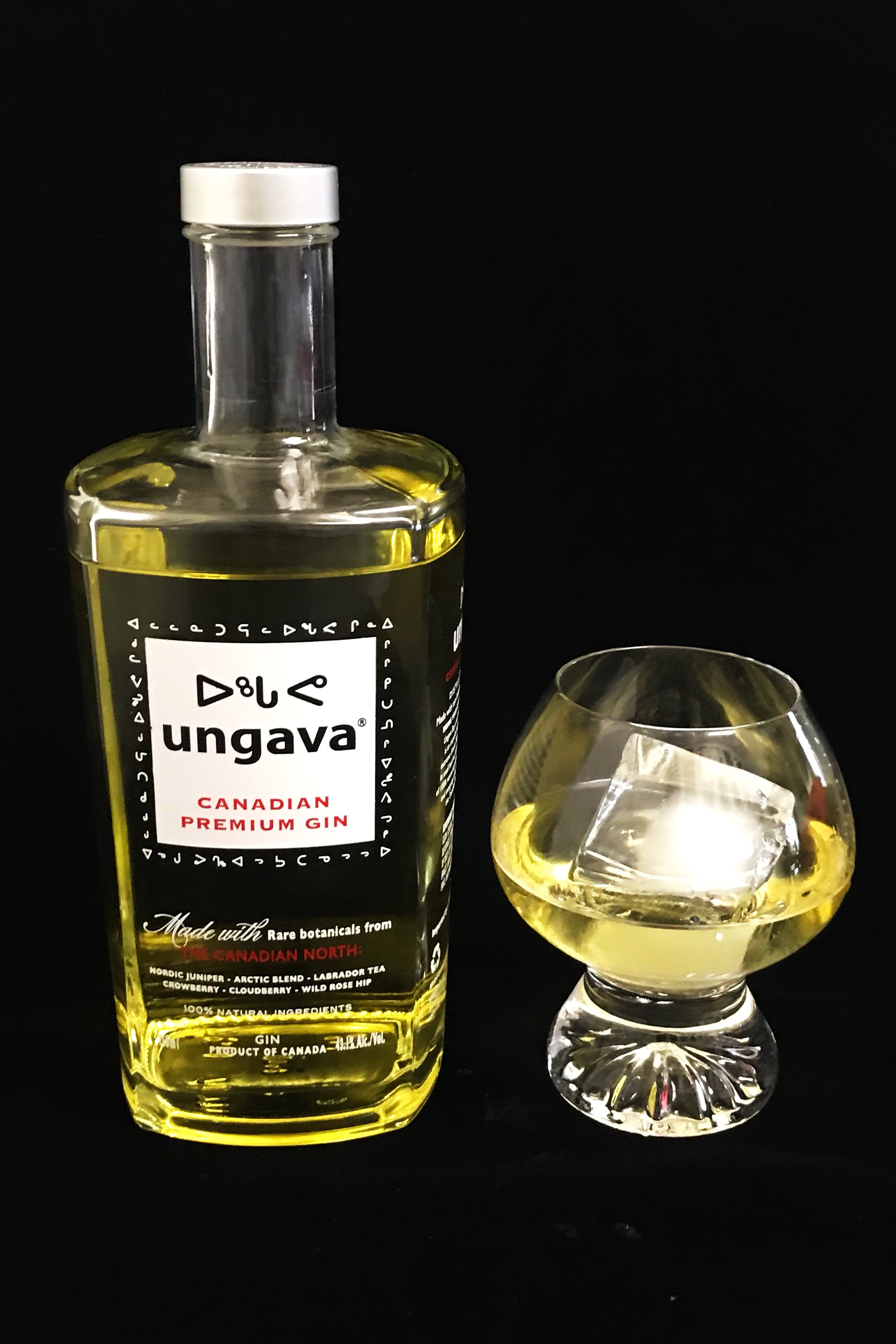
I had seen this gin first at the duty free shop in Aruba airport. It said it was from Canada. I was not sure how a Canadian gin would be like – so never picked it up. Came home and studied it up. And boy, did I regret it! Turns out this is a very unique gin. Made from very unique botanicals and herbs from north of Canada (North of Canada? Isn’t the whole country in the north?), it had great reviews and some fantastic feedback.

I looked for the usual places in Atlanta for this, unsuccessfully. Found one store in DC that could send a bottle to me but the delivery would cost me twice the price of the bottle. Filed that away under the “When I am in DC next, need to pick up a bottle” section of my mind.

The other day, I swung by a liquor store in Cumming after finishing my hospice time. I think I was there to pick up some wine to gift at a party that evening. As is my wont, I strolled over the gin section to see if there was anything interesting. I expected nothing. Guess what? There was a bottle of Ungava!

I think I forgot to buy the wine in the excitement but I certainly got a bottle of Ungava.

Opened it up last night.

First, the gin is made in northern part of Quebec. In that frigid environment, on the banks of the Ungava bay you get some unique botanicals. Six of theme are used in Ungava – Wild Rose Hips, Crowberry, Labrador Tea, Cloudberry, Arctic Blend and of course the mandatory Juniper is Nordic Juniper. Frankly, other than the Rose Hips (which is the fruit in a rose plant), I do not think I had ever heard of the rest.

Now the process is somewhat unique. The base alcohol is derived from local corn. Then the six botanicals are used in the distillation process like every other gin. The twist is that these botanicals are again used to do an infusion (like you get infused vodkas, for example). Among other things, this infusion gives it the unique yellow color.

The nose is very juniper-y and if you give it a few more seconds, you start getting the citrus in the drink. The palate is very complex. To be sure, not knowing most of the herbs, I could not identify much other than there was the juniper and the citrus. There was a hint of floral taste too.

The finish was not as prolonged as I expect from gins and was again a very juniper-y finish.
23 December 2017

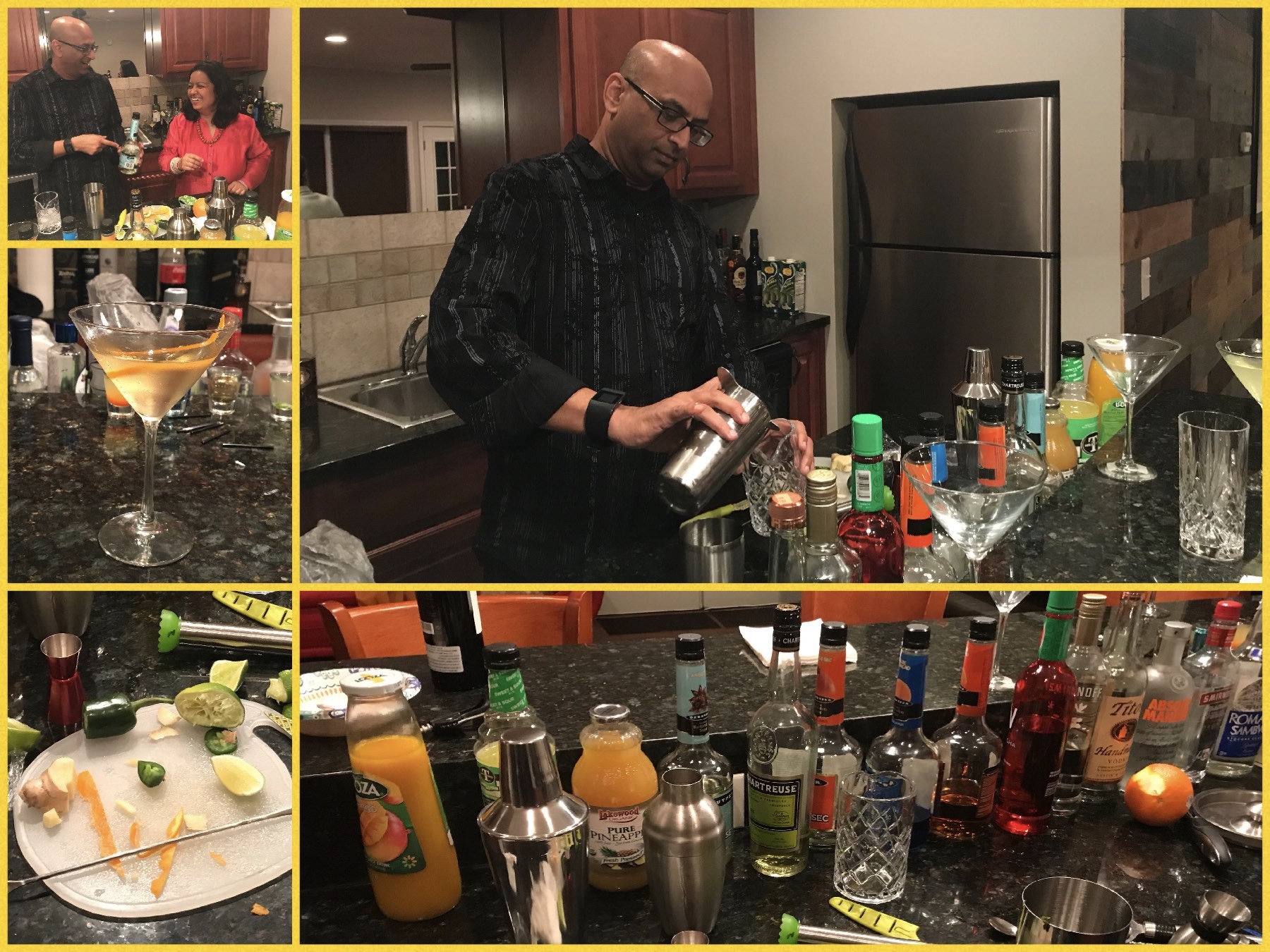
Mixing up drinks at a Holiday Party at a friend’s place

Since the whole year was spent on researching and tasting gins from different countries, I took a different tack and went with a Vodka theme. It was mostly Bengali people, the cocktails were tailored to the usual Bengali tastes. The first cocktail (BGJ) was mostly to cater to the tropical climate spicy tastes – had ginger, jalapenos and basil leaves with vodka. The second one was for the ones who like aniseed (very commonly chewed by Bengalis after dinner). Called a Samtini, this had vodka, Anisette liqueur and a dash of blue curacao. Then there was the Pineapple upside down cocktail – with vanilla vodka, pineapple juice and grenadine for the never failing sweet taste buds of the Bengali tongue. And finally to cater to the modern health conscious Bengali – who would like to have the whiff of sweet taste but not much sugar in it, I had the Harrington – which is vodka, orange curacao and a little of green chartreuse.

This was my last party mixing drinks for this year. Thanks are due to Joyjit and Baisakhi for letting me do it.

19 December 2017

From the bartender’s corner – Gin #28: Principe De Los Apostoles Mate Gin

This is a gin from another intriguing source – Argentina! This is the only Argentine gin I have been able to lay my hands on till date. The distillery itself is in Mendoza (famous for all the wines) but all the ingredients come from the place where this gin originated initially – Misiones. “Principe De Los Apostoles” literally meaning the Prince of the Apostles. The Mate refers to Yerba Mate which is indigenous to the area around Misiones and was originally used to make tea!

Concocted by the famous mixologist Tato Giovannoni, this gin is made by distilling yerba mate, eucalyptus, peperina (a type of mint indigenous to that area), coriander, juniper and pink grapefruit skin. The base alcohol is made from wheat. According to their website, they macerate everything other than the peperina for 24 hours in stainless steel containers and the peperina for only 2 hours before they are distilled in German copper stills.

Overall, I liked the effect the gin left on me. The nose is minty and almost floral. The palate is silky and pungent – the mate comes thru with a very balanced bitterness so as to not drown out the citrusy grapefruit. The only negative points I would give is to the length. The finish is very short and almost makes you wonder whatever happened to all that juniper. That said, I love this understated but memorable gin.

10 December 2017

From the bartender’s corner – Gin #27: Tanqueray Rangpur

I was introduced to this gin a few years back by Neil Bhattacharya. Both Sharmila and I took an immediate liking to it. I am sure part of that was driven by our noses recognizing some aromas from the long past in India.

First, the root of the name “Rangpur”. Rangpur is an area (there is a city and a district by the same name) in north Bangladesh. There is a particular citrus fruit that is very popular there and the fruit itself is believed to have originated from there. Although it is referred to as “Rangpur lime”, in reality it is a cross between a lemon and a mandarin. It is reddish-orange and not green like a lime. The aroma is floral and is somewhat sour in taste like a lemon.

It is this Rangpur lime that lends this gin a memorable and a fiesty citrus profile. On top of that, this gin has bay leaves and ginger – something Sharmila and I grew up with all our childhood (very common ingredients in a Bengali kitchen). Of course, the gin has to have the juniper in it to be considered a gin.

Like the Harahorn gin, this gin met with great success in the San Francisco World Spirit Competition within one year of being born (2006). In fact, it bagged top awards three years in succession starting from 2007.

The nose, palette and finish – all are overwhelmingly citrusy – and a lot of different notes of citrus too. The juniper makes its bitter presence felt only towards the end. There is a chance that some puritans might consider the smothering of the juniper by the citrus in such a pronounced fashion to be rendering less of a “gin” character to this drink.

If you like citrus, you cannot go wrong with this. I tried on the rocks and it was delicious.

3 December 2017

From the bartender’s corner – Viking Corpse Reviver #2

This is the first cocktail I made with the Harahorn gin. Of course, given the origin of Harahorn gin in Norway, I had to call this a “Viking” Corpse Reviver. I stayed mostly true to the formula of the traditional Corpse Reviver with the sole exception that instead of mixing in the absinthe, I rinsed the cocktail glass with it and threw the excess part.

Next time, I will probably go with a lower amount of fresh lemon juice than the original recipe calls for. To me, at least, the sour citrus is overwhelming any traces of the sweet citrus (orange) or the junipers (and in this case the blackberries too).

Otherwise, as promised, with 92-proof gin, lillet blanc and Cointreau – not to speak of the 148 proof absinthe, this is sure to revive most corpses!!!

P.S. The way the Vikings played today, I might actually need a Falcons Corpse Reviver next 🙂