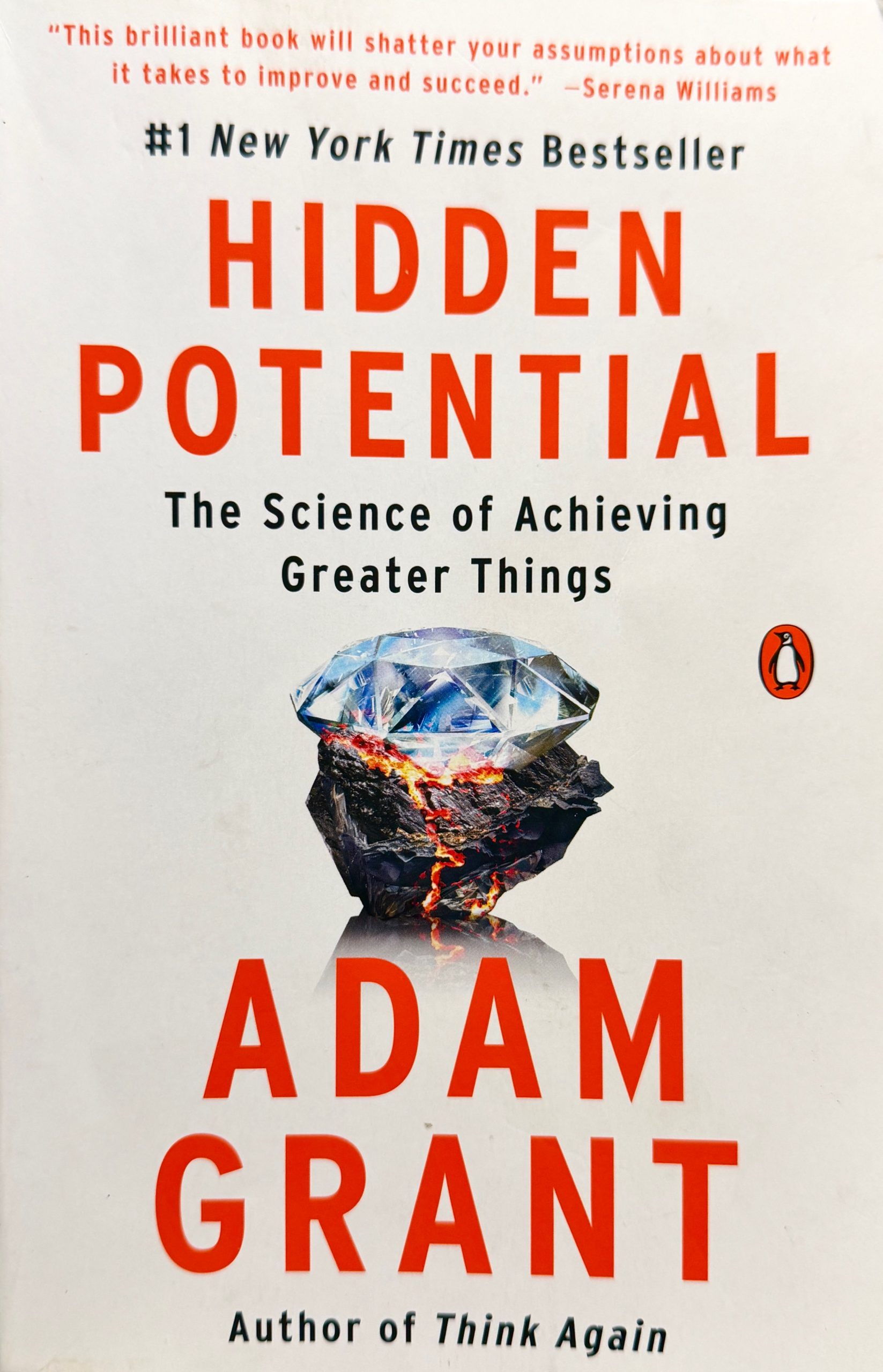
Book Review: Hidden Potential by Adam Grant
I had picked up this book at an airport store on my way to Uruguay. I was impressed by another of his books – Think Again. This one did not disappoint either.
He dives into how to bring out the potential in every human being, of oneself, as well as bringing the same out in others. In the process, he breaks down a few myths and misperceptions.
The biggest one is how we judge and elevate people based on peak performance, not the journey there. The point is that if you want to understand a person’s full potential, it is not about the peak reached but about how much one has traversed to get there.
For oneself, he asserts that we stop learning as we grow up because we are unwilling to embrace the awkwardness of learning. Imagine picking up a new language. We wait to become experts before we feel ready to talk to native speakers. But the process of becoming an expert goes right through the heart of talking to native speakers while you are learning – and in the process overcoming the fear of making mistakes and being awkward.
He also asserts that to achieve full potential, one needs to accept imperfection. (the art of Wabi Sabi). Trying to be perfect will lead one down a very narrow path instead of developing new ones. He quotes this art of balancing the flawed with the flawless in words that appealed to me:
“There is a crack, crack in everything
That’s how the light gets in.”
Another important concept he stresses is that the path to full potential will not be linear. You will get stuck, have to back out, and then seek alternate paths. If you are not getting stuck, you are not on a path of full potential. “The roundabout path to forward progress”, as he says.
When it comes to helping others reach their full potential, he has a couple of important pieces of advice for all leaders. First, focus on what makes a great team, and it is not the same as putting great individuals together. The other is to judge a person’s character more than their talent. Talent sets the floor, but character sets the floor.
What is character? The author says that character is often confused with personality, but they’re not the same. Personality is your predisposition. Your basic instinct for how to think, feel, and act. Character is your capacity to prioritize your values over your instincts.
Some interesting direct quotes:
“Getting better is a worthy accomplishment in and of itself.”
“Ambition is the outcome you want to achieve. Aspiration is the person you hope to become.”
“Teaching is a surprisingly powerful method of learning.”