23 February 2020

Sunday morning logic puzzle (a trifle easier than before)

Three smart men were trying to find out who is the smartest of them all. Or was at least most logical and quickest thinker. To resolve that, they went to a woman who had the reputation of being the smartest of them all. She devised a quick problem for them. She blindfolded them and painted a dot on each of their foreheads.

She then told them “I have painted a dot on each of your foreheads. The dots are either white or black in color. I am going to soon open your blindfolds. You will be able to see other’s dots but not your own. I am then going to ask you to raise your hand if you see a white dot (on either of the two friend’s foreheads). Then I am going to ask you to guess the color of your own dot”.

Saying so, she opened their blindfolds.

“You may raise your hand now if you see a white dot”

All three men raised their hands.

“Okay, now guess what color is on your forehead”.

The three men started pondering and soon one of them – who was indeed a little smarter than the others – said “I have a white dot on my forehead”.

“Correct”, said the lady.

Question: How did the man figure out what color he had?

11 February 2020

Here is another puzzle

There are three archers – Hubert, Anamika and myself. Hubert is the world renowned, highly decorated Olympics champion from Belgium who is a “sure shot”. Meaning he never misses. Then there is Anamika – who is a amateur archer but has gotten her game to a point where she scores 2 out of 3 times. And then there is Rajib – yours truly – who barely knows which end of the arrow should point towards you. And I have an average starter’s chance of success – 1 in 3.

We find ourselves in a contest where we can only survive by killing the other two. (One successful shot with the arrow is enough to kill anybody). Also, we three are highly intelligent and know how to calculate probabilities of success. (With that level of intelligence, how we got ourselves into this situation is a good question but terrible for this puzzle).

The rules are the following:
Since I am the novice, I get the first shot.
Next, Anamika – being the second best shot goes. Of course, that assumes I did not aim at her and succeeded in which case Hubert goes next.
Once Hubert has had a chance (assuming he was still alive after I and Anamika had our shots), the cycle continues.
So it is me -> Anamika -> Hubert -> repeat till there is one person standing.

The question is: What should be my strategy as the first shot to maximize my chances of still living after the whole ordeal.

9 February 2020

Sunday morning puzzle.

(well, evening, if you are on the other side of the world).

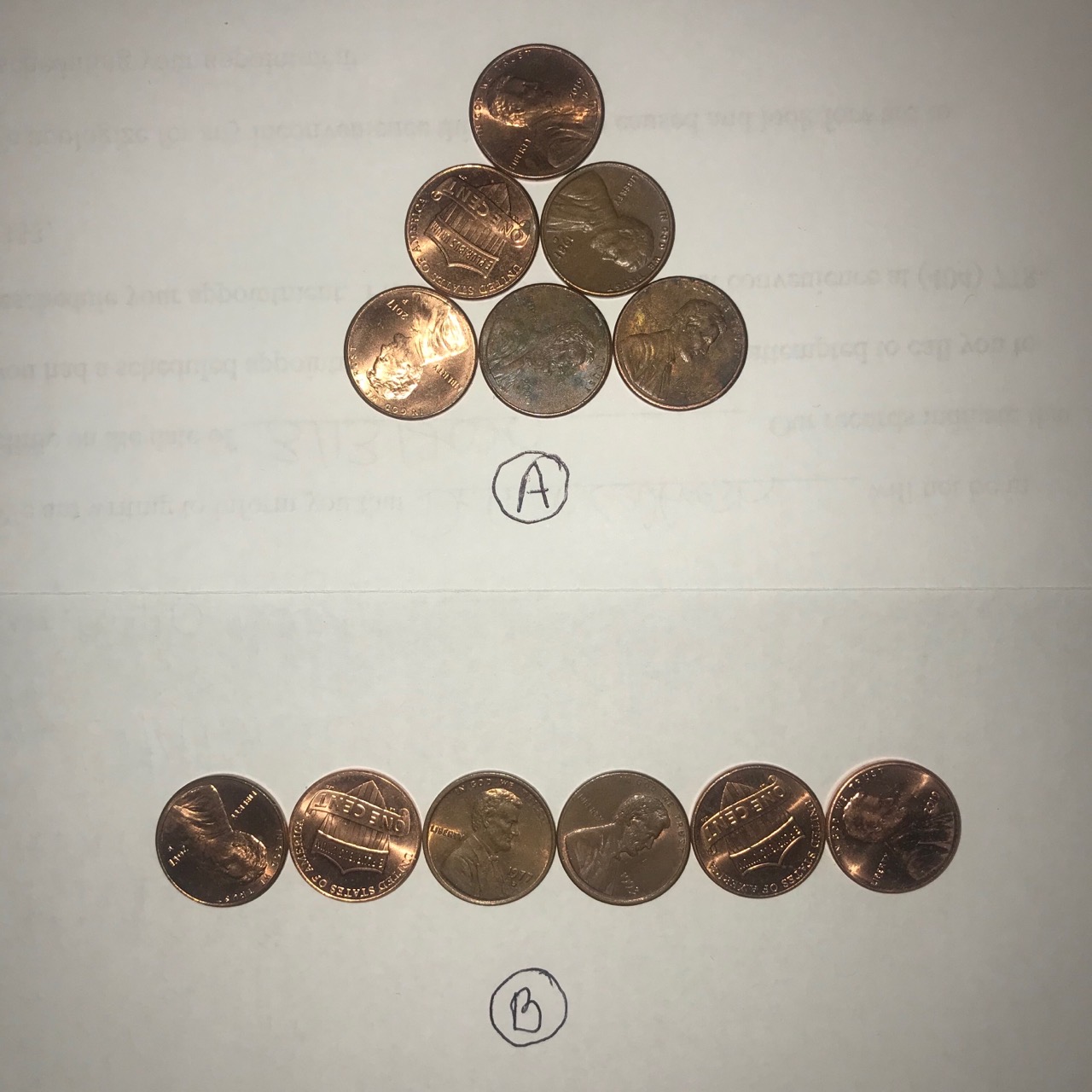
Start by getting six identical coins. Arrange them in the pattern “A” as shown in the picture. (An equilateral triangle).

The goal is to eventually land up with the pattern “B” – again, as shown in the picture. (A straight line).

Here are the rules…
1. You cannot lift a coin – merely slide from its current position to the new position.
2. You move one coin at a time.
3. When you move a coin, no other coin changes position.
4. IMPORTANT: When you move a coin to a new position, in that new position, it MUST touch TWO other coins at least.

Finally, this is not a trick question – nor is there any sleight of the hand involved.

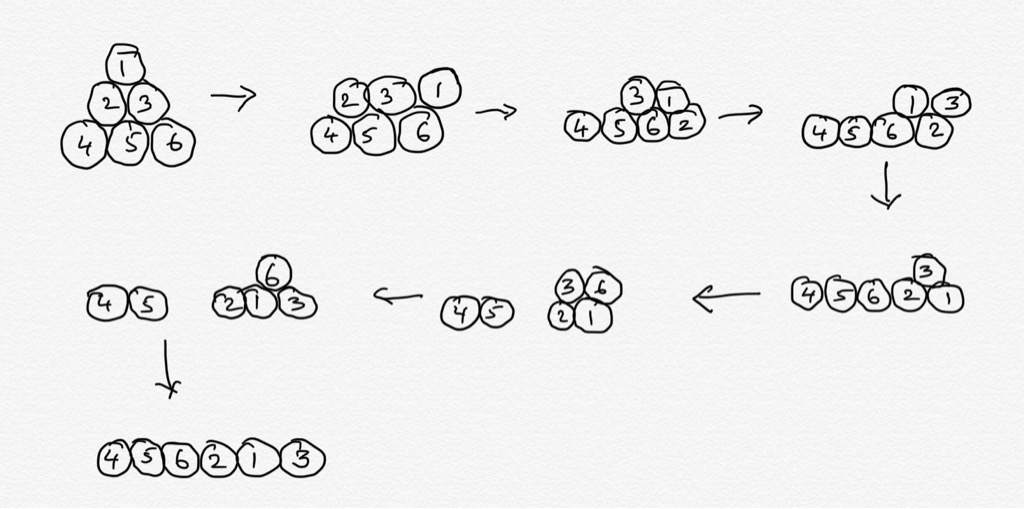
I am sure there are many ways of doing it but the one I got needed me 7 moves. (Not sure if that is the shortest way though)

1 January 2020

A logic/mathematical puzzle to start the New Year

Sunil Roy and I were strolling down the road – somewhere in Chelsea area with the rest of the family – when he posed an interesting puzzle for me. See if you can get it.

To give everybody a chance, refrain from posting the answer in the Comments section. Send me a personal message and I will put your name up if you solved it.

You have two dices. One has 1 thru 6 painted on its faces like a normal dice. The other has blank on every face. You can write down any integer number 1,2,3… on each of the blank faces of the second dice. You can even leave it blank – which would stand for 0. You are allowed to repeat the numbers (you can have two faces with the same number).

The question is: What numbers would you paint on the six faces of the second dice such that:

(*) When the two dice are rolled together, the sum total of the two faces up can be any integer between 1 and 12 AND
(*) The probability of any of those integers (meaning the sum of the two faces up being 1 or 2 or 3… or 12) is exactly the same.

You can assume that the two dices are unbiased. (It will be completely random which face will show up)

22 December 2019

One holiday puzzle

One of those letters for digits… with a twist.

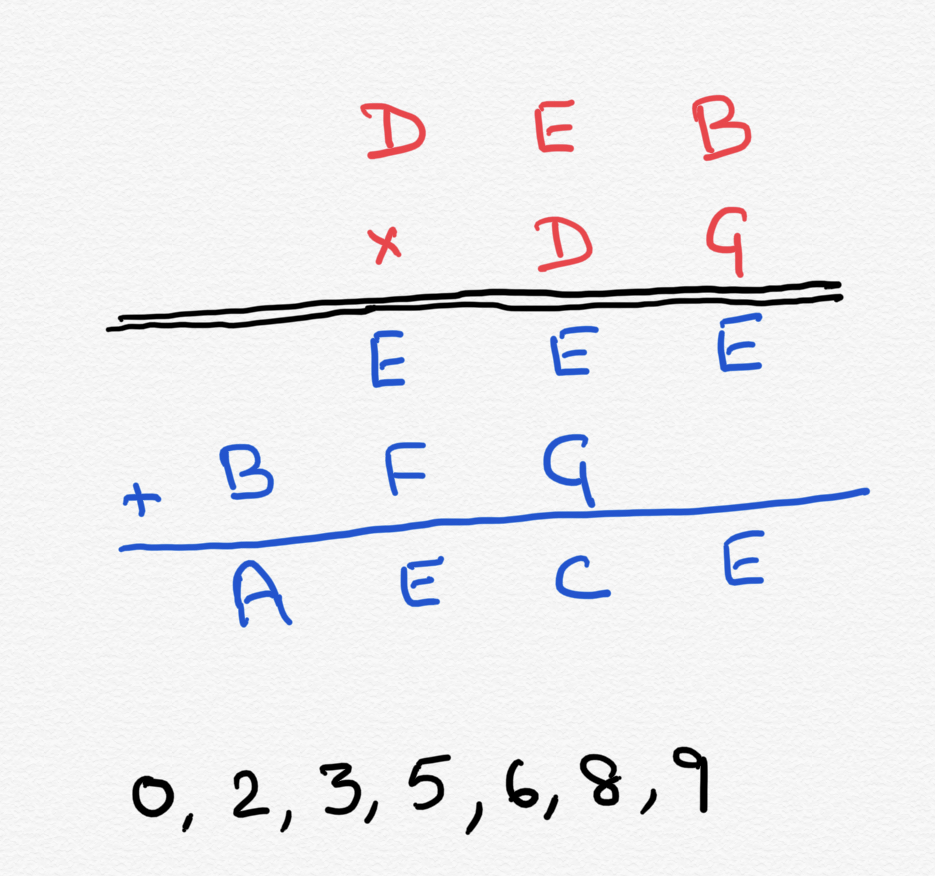
Look at the long multiplication below. As you see, a three digit number DEB is being multiplied by a two digit number DG to give a four digit number AECE. Each letter stands for a digit.

Here is the twist though: A letter above the black line (in red color) if also found below the black line (blue color) is not going to have the same value but will be off by one from each other. Of course, above the black line, any letter, if found twice will have the exact same value. Likewise below the black line. The twist comes only if the same letter comes both above and below the line.

As an example, the two D’s will have exactly the same value since they are both red. But the red G and the blue G are going to be off from each other by one since they have different colors. (If one is 6, the other can be 5 or 7).

The only digits used in this problem are 0,2,3,5,6,8 and 9.

Can you find out what the letters stand for above the black line and below the black line?

26 November 2019

Ready for a puzzle?

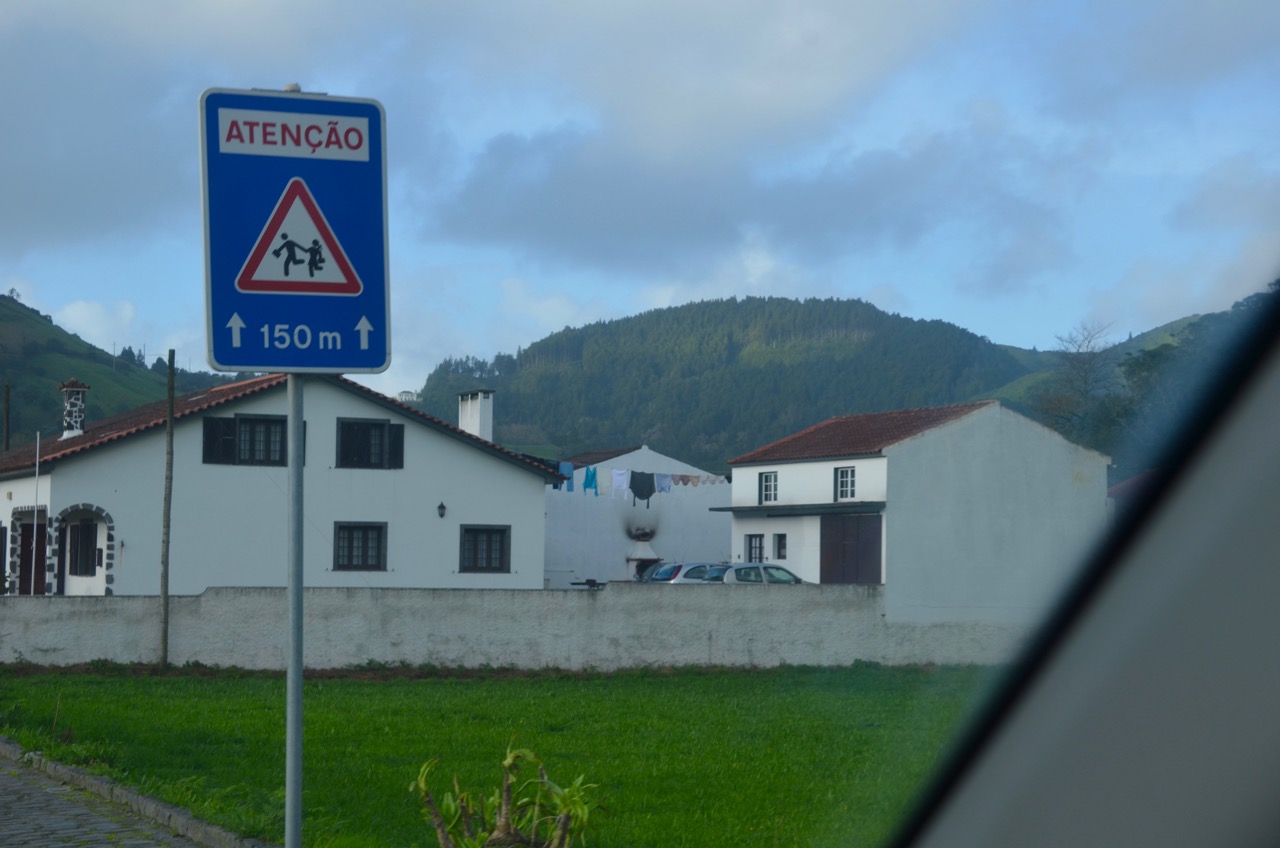
Do you see something intriguing in the picture?
Check out the clothesline with all the clothes hanging (a lot of unmentionables, I must admit) between the two buildings (sort of in the middle of the picture). Now look at the height of the buildings… how the heck do they put them up there?

15 November 2019

Puzzle: Of wine and water…

There is a wine glass filled with 1000 spoonful of wine. There is a water beaker with 2000 spoonful of water.

You take a spoon of water from the beaker and put it in the wine glass and mix it thoroughly. Then you take one spoon of the stuff (mostly wine with a little water) from the wine glass and put it in the water beaker and mix it thoroughly.

You do the whole thing over again. And one more time (so total of three times).

Of course increasingly the water beaker is getting more wine and vice versa.

Question is at the end of the third full round, do you have more wine (by volume) in the water beaker or more water (by volume) in the wine glass and by how much?

Here is a tougher version… what if after the above three cycles, you did the water beaker to wine glass one more time and stopped? (You did not do the wine glass to water beaker to complete the cycle; essentially three and a half cycles). Now, do you have more wine (by volume) in the water beaker or more water (by volume) in the wine glass and by how much?

Instead of putting your answer (and how you arrived at it) in the Comments section, write to me directly in messenger.