21 June
2017

21 June
2017
Some very interesting and uncommon words…
Came across some interesting words. How many of these do you know?
1. I have a friend – Narayan Venkatasubramanyan – who was once invited to create one of those Sunday New York Times crosswords. I am sure you know a lot of people who are very good at solving them. Maybe you are one of them. What is the English word for somebody who is adept at creating or solving crossword puzzles?
2. You have heard of being addicted to alcohol, to smoking and all that. Did you know that you can get addicted to tea? In fact there is an English word which means somebody who is addicted to drinking tea. Do you know what that word is?
3. You must have seen that when people sign their signature, usually they put in a flourish at the end – a long line, a curved design, two dots and what have you. Earlier, it was put in to prevent forgery by putting some uniqueness in the signature. What is the English word that means that flourish you put at the end of a signature?
4. There is a single English word that means a striptease performer. What is it?
5. I need to research more to find out why it is so but there is an English word to describe all books printed before the year 1501. (Very early stages of printing). Have you heard of that word?
18 June
2017
My annual obligatory Father’s Day wishes… :-)

17 June
2017
Half marathon on a warm Saturday morning
Started the run by myself not sure how much I was going to put in. After the first mile, ran into Samaresh running from the other side. Turned around and ran with him. He was clipping at a pretty good rate. The snake he had seen a mile before might have something to do with it 🙂
After we ran for four miles together, he left having completed his longest run in quite some time. I went back to the trail to put in another eight miles.
That 13.1 miles (21Km) took 2 hours and 15 minutes in 86 deg F (30 deg C). The sight breeze and shade in the trail took most of the pain out of the heat…

17 June
2017
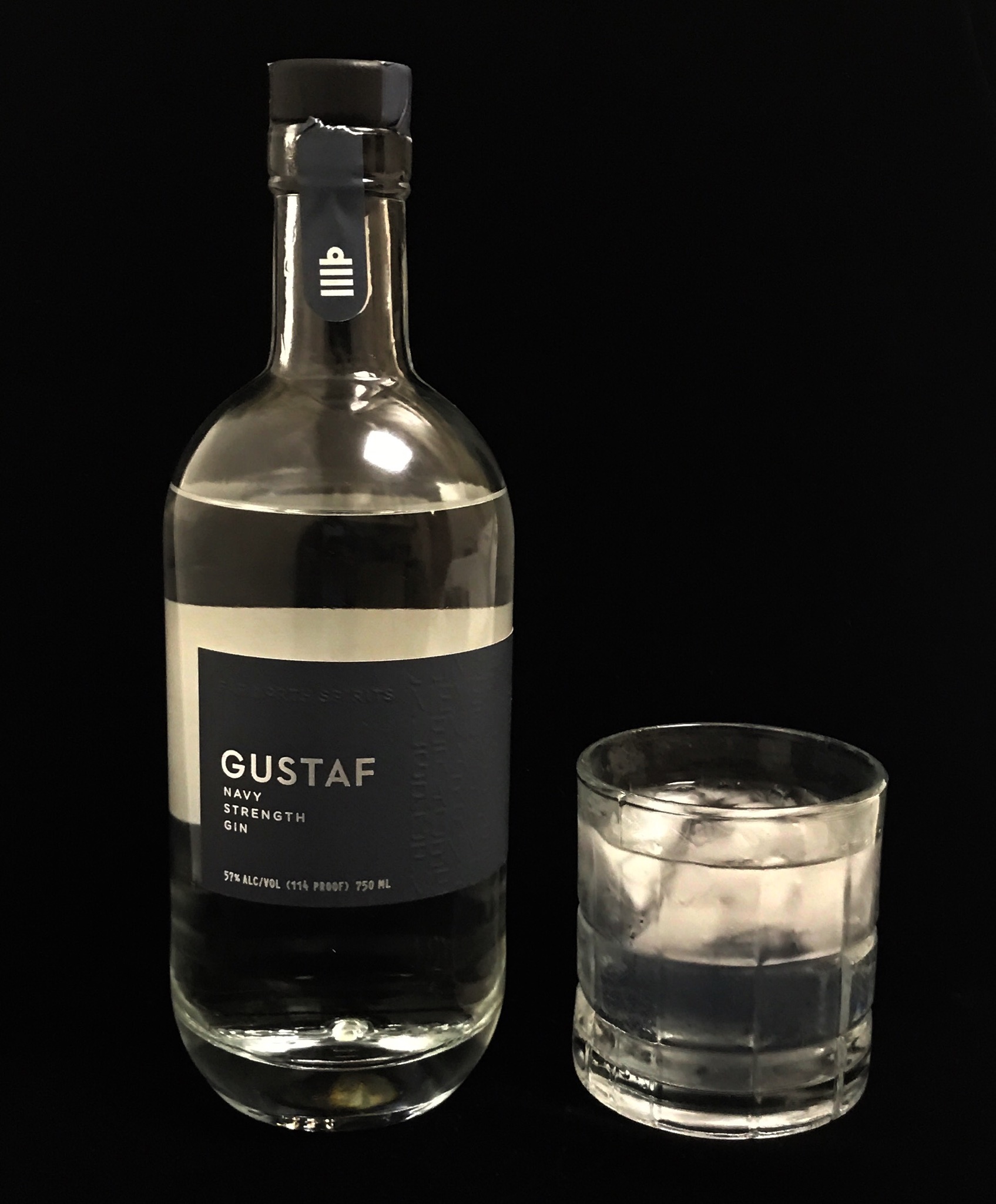
From the bartender’s corner – Gin #14: Gustaf Navy Strength Gin
First, some history behind “Navy Strength”. Back in the days, all English sailors were given their ration of gin everyday in the high seas. I need to go back and do my research, but I think they might have been given twice a day of a serving each time. The challenge the sailors had faced was that gin – which was often stored close to the gun powder in the down floors – would spill (usually accidentally due to the weather in the high seas) and render the gun powder unusable.
Of course, trust the English genius to come up with a solution that had nothing to do with further separation of their storage or anything like that. The solution was to increase the alcohol content of the gin (reducing the water). Sure enough, at 114 proof (57% alcohol by volume), you can mix gin with gun powder and the gun powder would still fire. There is no written record of how serpentine its path was as it weaved thru the sky 🙂
Gustaf, therefore, is much stronger than normal gin and comes with its big kick and a very strong juniper edge. While the name is Swedish, this is actually made in Minnesota. In the northern most distillery in the lower 48 states of the USA – called Far North Distillery. It does have Swedish roots – the distiller’s grandfather was an immigrant from Sweden – called Gustaf – and settled in Minnesota.
The base alcohol is made from Winter Rye. And the eleven botanicals used include juniper, coriander, fennel, meadowsweet, lemons and grains of paradise. One uniqueness of this gin and distillery is that everything is produced in the farms around the distillery – starting from the rye.
The nose was floral along with the distinct rye edge. While many references on this gin suggest juniper is subdued in this gin at least in the nose, I thought I could detect it right from the get go. This might have to do with the fact that, because of its strength, instead of taking it on the rocks, I had splashed some Fever Tree Indian Tonic water on it.
The palette was strong and you would expect from a Navy Strength gin. You can feel the stiffness and heat from from the front gums all the way to the back of the throat.
The finish is not as strong as I was expecting. Almost bitter but very dry…
17 June
2017
How did that come around? – Kick the bucket
This evening a very young visitor to our house was mentioning about the unfortunate passing away of her P.E. teacher. Instantly, the phrase “kick the bucket” came to my mind. And the next instant, I was wondering why is it called “kicking the bucket”?
After the guests left, started doing the research. And finally came to find this…
A common – and wrong – derivation comes from the theory that people used to commit suicide by standing atop a bucket, tying their neck to the ceiling and then kicking the bucket. There is another theory that instead of committing suicide, people were hanged that way. Both are wrong. Buckets are very unnatural choices for this purpose. In fact, statistically, a chair is more commonly used for suicide in that particular way.
There was another theory about the goat kicking the bucket after getting milked and coming to an unfortunate end.
The real derivation has an intersting twist to the word “bucket”. Back in the 16th century, “bucket” refered to a wooden beam or frame. The root comes from a French word. Such a frame was often used to hang an animal up before being slaughtered. Most commonly it was used for pigs. A refernce to this meaning of the word “bucket” can be found in Shakespeare’s Henry IV.
Anyways, the pig while being slaughterd would kick violently as it went thru its death spasms. As gross as that picture is, that is how “kicking the bucket” came around.
Who knew?
15 June
2017
10K in Las Vegas

13 June
2017
4 quick miles by Willamette river…

10 June
2017
Sudipta Chattaraj will be very proud of me!!
A couple of months back, when I had posted my fountain pen collection, my friend from elementary school days – Sudipta Chattaraj – had reminded me of the WingSung Hero pens that we used to use in our childhood.
I still remember how I got my first WingSung pen. I was in Narendrapur in 11th grade. I had gone to one of my seniors Sanku Mallik (who was the topper in our previous batch) to get one particularly tough trigonometry problem solved and noticed his very nice pen (later found out to be a WingSung pen). I also noticed that he, rather undramatically, solved the problem like he had been having trigonometry problems for breakfast from right about the time he was three and a half years old or thereabouts.
Thoroughly convinced that having a Wing Sung pen and doing trigonometry easily could not just be a matter of correlation – that there must have been a cause and effect relationship – I made it my life’s mission to get myself one such pen. That Sunday, armed with a gate pass, I slipped out of the residential campus and a short bus ride later started hunting for a WingSung pen in the shops of Garia. And finally got one!! A red-brown colored one!!
Not terribly sure it ever improved my trigonometry but I do remember going back later and getting a blue colored one too. Calculus was also particularly tough that semester!!
I used to cherish those two pens. Many a letter had been written with those two pens. Many a test paper saw me getting stuck with those two pens between my fingers!!
Sudipta had suddenly reminded me of those two pens. Like I search the world over for my old friends, a similar search started for those Wing Sung pens. Unfortunately for me, Wing Sung pens do not have Facebook accounts. Nevertheless, I was able to finally contact a guy in remote China who said he could get me one. I insisted that it had to be the model 233 (that was the only model that had that orange color window to check on the ink level).
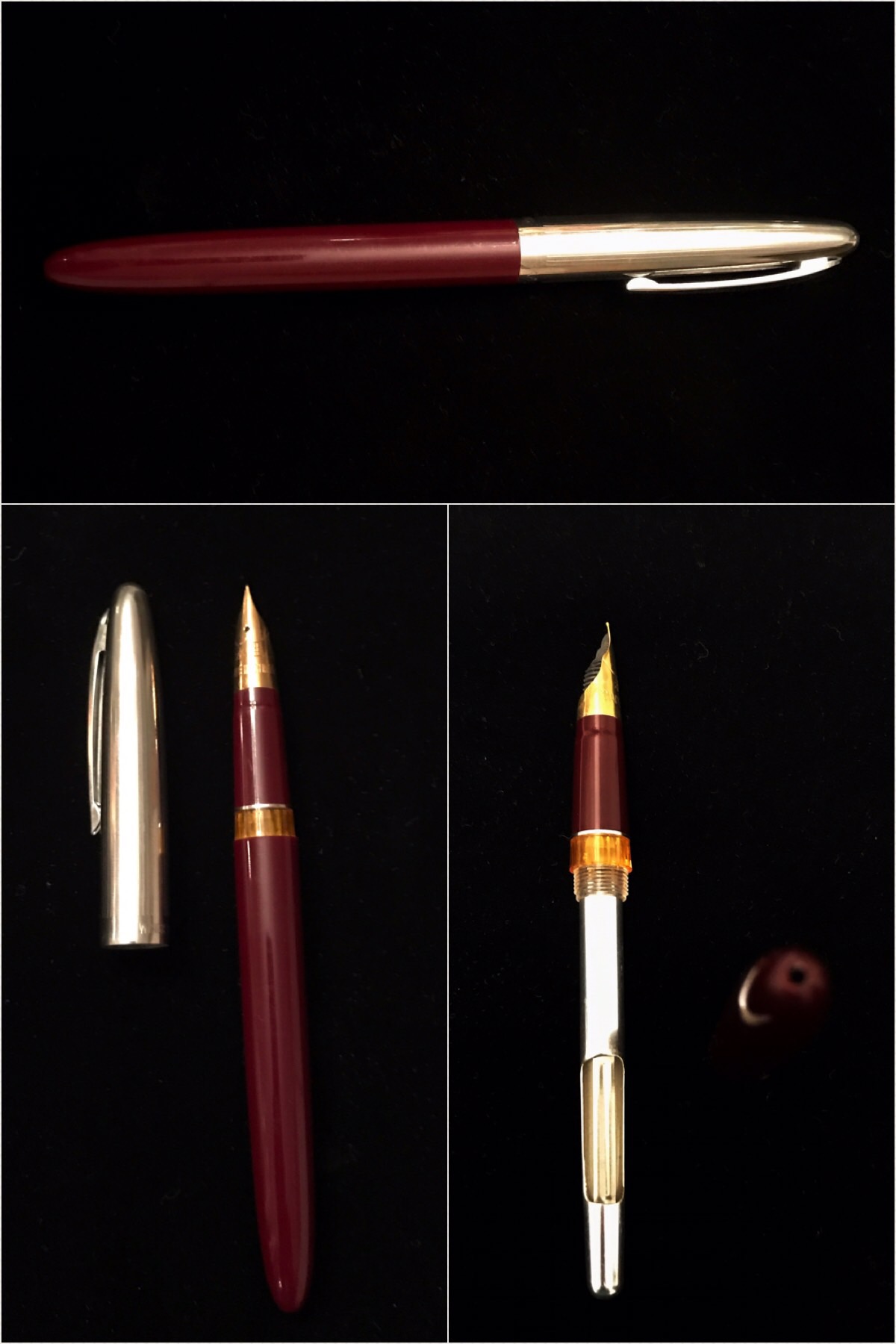
What do you know? For the price of a cup of Starbucks coffee, I am a proud owner of a brand new WingSung Model 233 pen!!! Exactly the same color as the very first one I possessed – back in 1983!!
Previous owners of a WingSung pen probably remember the unique nib shape that is integrated into the body, that small orange window to check ink level, the small hole in the back to even out the pressure to keep the ink flowing and above all – the unique press clip cartridge system to fill in ink. Absolutely the cleanest way of refilling ink from an ink pot I have ever found.
I can also tell you that the pen is writing even better than most pens I have at hundred times that price!! But that might have to do with the priceless nostalgia too!!
10 June
2017
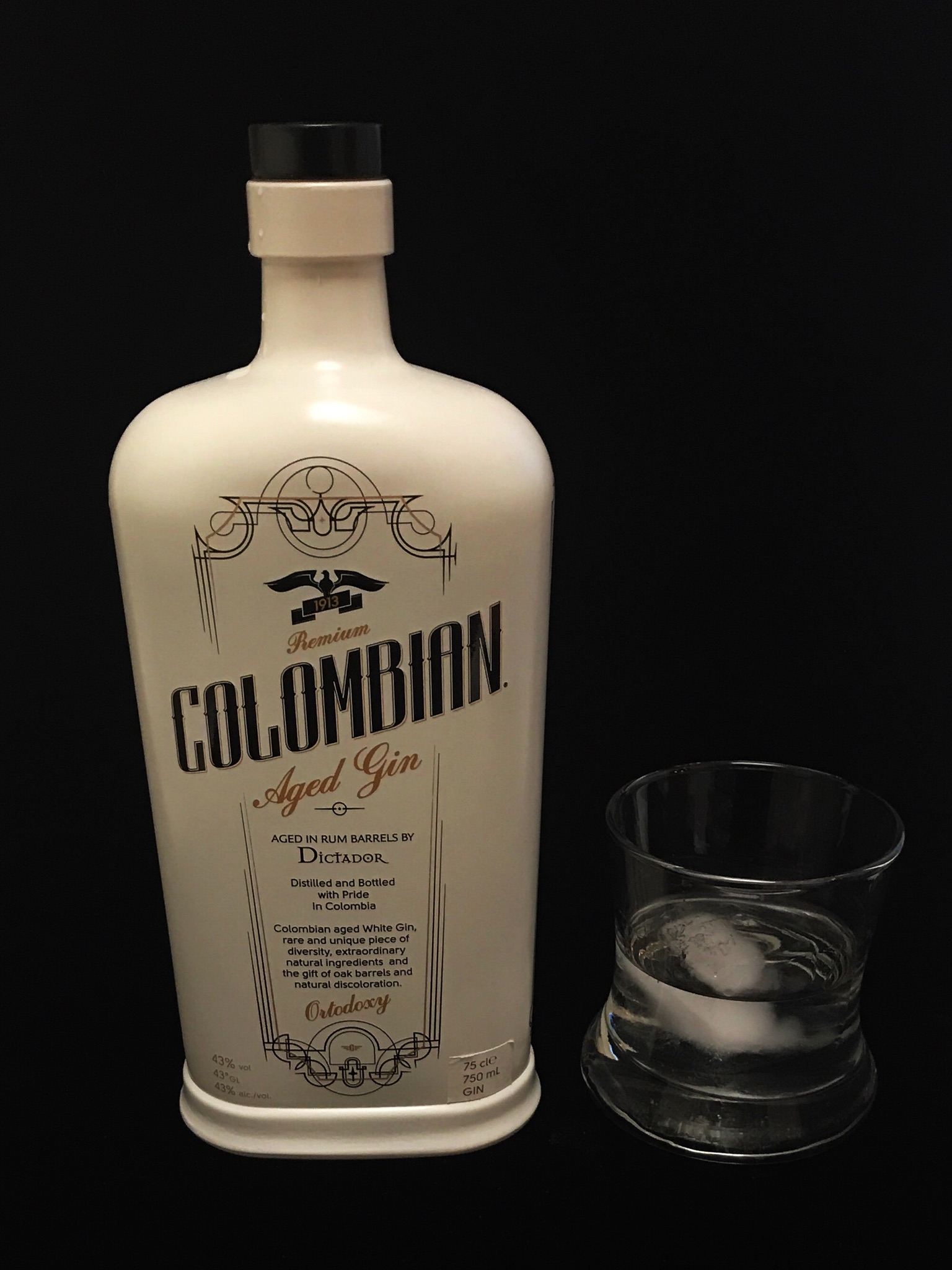
From the bartender’s corner – Gin #13: Ortodoxy
This gin is interesting in many ways. First, it is from a very uncommon country – Colombia. It is in fact made in the beautiful Cartegena district in the Dictador distillery by the master Hernan Parra Arango. There is a historical story of Severo Arango y Ferro who was sent in the 18th century from Spain to improve tax collection in Colombia. He was somewhat of a dictator. Parra Arango is actually a descendant of him and that is how the distillery got its name!
The second interesting angle to this gin is that it is not made from any neutral grain spirits but sugarcane!! As you can imagine, Colombian weather grows a lot of sugarcane. Of course, rum is the first go-to alcohol from sugarcane. But it is the same base that is used for this gin. In fact it is distilled five times and in the last distillation, macerated herbs and botanicals are introduced.
The botanicals are the typical ones – juniper, Angelica root, lemon peel and pepper and some unusual local herbs including mint, berries and ginger.
The third interesting angle is that this gin is then aged for 35 weeks in rum barrels. Finally, it is carefully filtered to take out the coloration.
The nose of the gin was predominantly citrusy in the beginning. After some time, the juniper started breaking out very well. To the palette, it is very crisp but after a few seconds it mellows down (almost like buttery) in the mouth. The finish was more on the weaker side for some reason.
I will try with some tonic water next and see how it brings out the complexities of this gin.